An office needs more than an occasional tidy before a client visit. Crumbs collect in shared kitchens, meeting rooms are used throughout the day and floors carry dirt in from outside. Go Cleaners Guildford helps you plan office cleaning around the way your team actually uses the building, with the rooms, frequency and access arrangements agreed before work starts.
Start with the areas that cause the most day-to-day inconvenience. In a small office, that might be the kitchen and toilet. In a larger workplace, reception, meeting rooms and busy corridors may need more attention. Tell us what your staff already handle, what belongs to the landlord and which tasks you want priced separately, so the brief reflects your building.
Desks and shared work areas
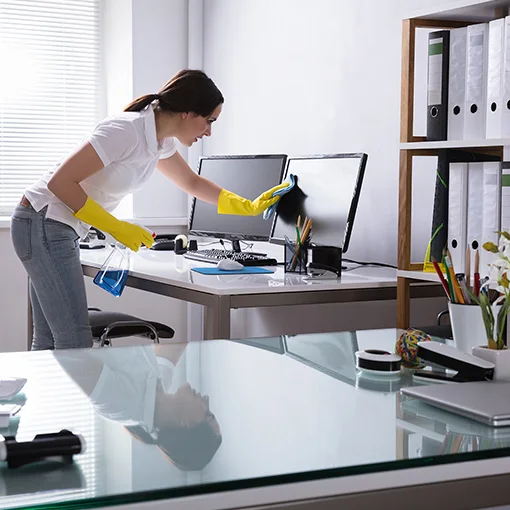
Accessible desk surfaces, tables and shelving can form part of the agreed routine. Staff should put away paperwork, valuables and personal belongings first. A cleaner should not have to guess whether a document can be moved or thrown away. Screens, keyboards and other equipment need their own instructions; including a desk in the schedule does not automatically include cleaning everything on it.
Kitchens and tea points
A shared sink, worktop and cupboard handles quickly show the effects of a busy day. Specify which surfaces need cleaning and whether appliance exteriors are included. Washing staff dishes, emptying a fridge and cleaning inside cupboards are separate decisions. A simple staff rule about food and washing up makes the cleaning visit more productive and avoids disputes over whose lunch was moved.
Washrooms and touchpoints
Toilets, basins, taps and surrounding surfaces deserve a clear place in the schedule. Include the number of cubicles and any showers when requesting a quote. Door handles and other regularly touched points can be listed too. Replenishing soap, paper or sanitary supplies needs a separate arrangement about who supplies stock, where it is kept and how shortages should be reported.
Floors, bins and reception
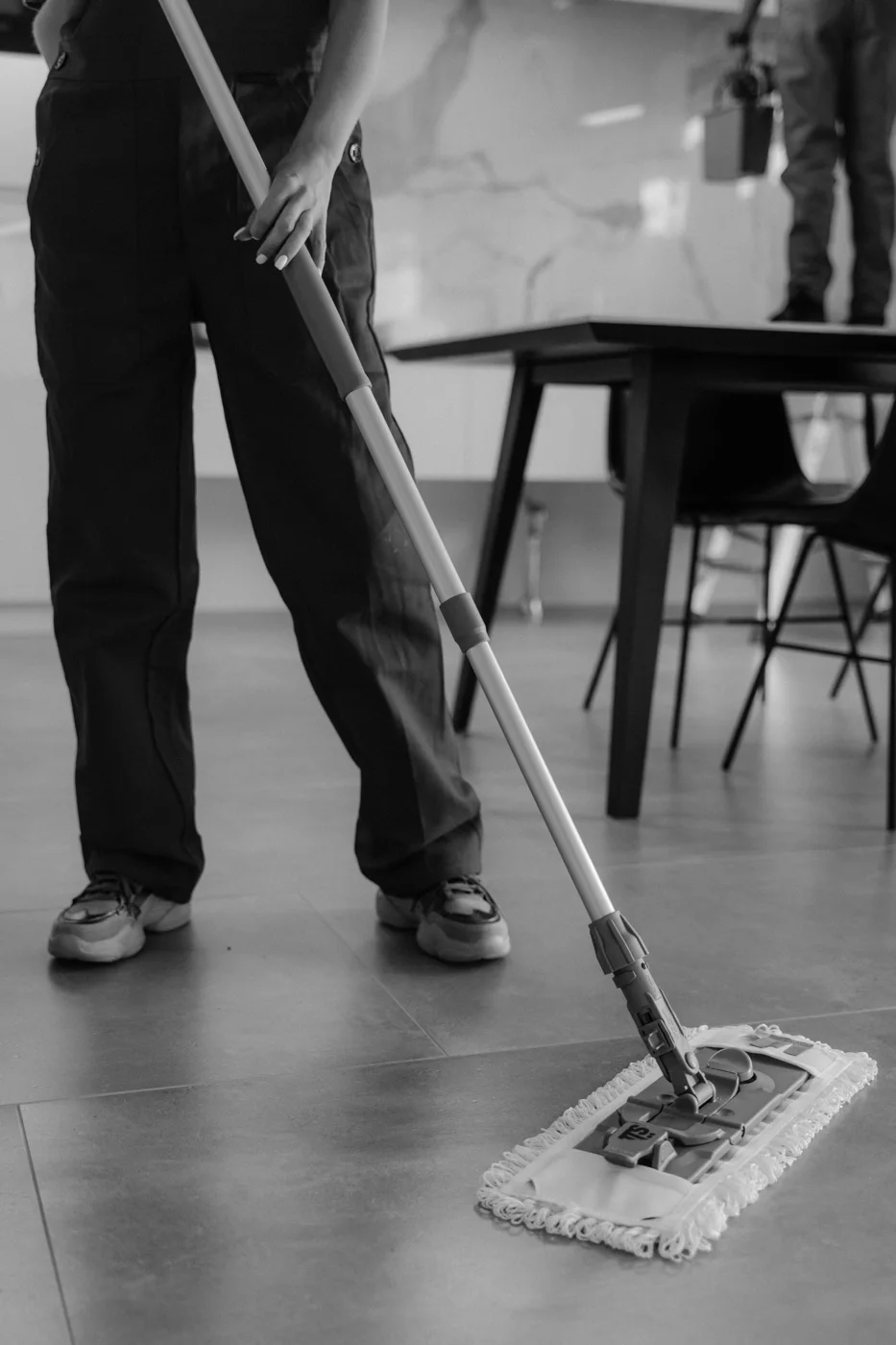
The entrance often needs different attention from a quiet meeting room. Identify carpeted areas, hard floors, stairs and mats, and explain where ordinary office waste goes. Recycling streams should follow your existing site arrangements. Deep carpet cleaning and floor restoration are not the same as routine floor care, so ask for those tasks separately if traffic marks or ingrained dirt need attention.
CHOOSING THE RIGHT SERVICE
A routine for your office’s working week
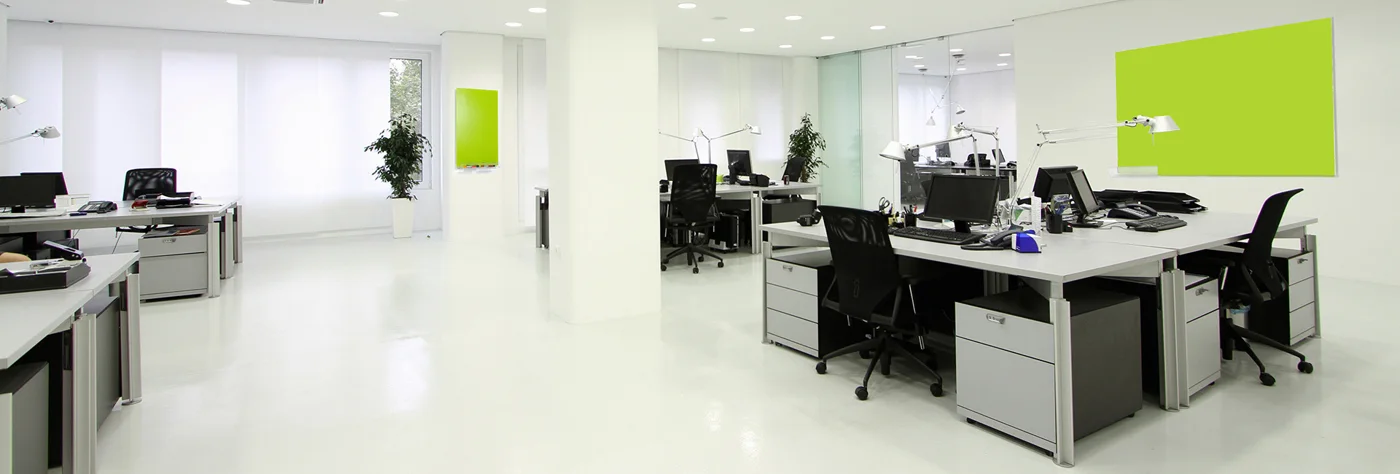
Look at occupancy rather than desk count alone. A washroom used by clients may need attention even on a quiet staff day. Hybrid working can concentrate kitchen and meeting-room use into two or three days, so explain your busiest periods when choosing visit frequency.
Set an order for the recurring tasks, with reception, washrooms and food areas considered alongside desks and floors. Training days and staff events can be added as separate requests. For a continuing agreement with scheduled reviews, see cleaning contracts.
Desks, equipment and private information
Ask staff to put away documents, personal items and food before desk surfaces are cleaned. Identify restricted rooms and equipment that must remain untouched. Papers beside a bin should not be treated as waste, and confidential disposal stays under your own arrangements.
Internal glass, chair upholstery and carpet treatment need explicit inclusion. A cleaner should not unplug computers or move cables to reach the floor. If ingrained carpet dirt is the issue, plan a separate office carpet clean with time before the room returns to use.
Access during and after work
Choose who provides entry and who checks the office afterwards. For keys, passes or alarm instructions, agree issue, storage and return arrangements. Include lifts, parking, loading restrictions and building induction requirements so the first visit can begin without an access problem.
During occupied hours, identify meetings and calls that cannot be interrupted, and keep essential routes available. Wet-floor areas need a plan for people moving through the building. Share existing site rules and flag faults such as leaks before work starts.
THE DETAILS OF YOUR VISIT
Office cleaning costs and inclusions
Provide the floor area, room and toilet count, floor finishes and preferred frequency. State whether the office is maintained already or needs an initial deeper visit. Photos help show layout and heavily soiled areas; restricted rooms should be identified in the request.
The published office cleaning prices provide a starting reference, with the actual quote based on your scope. Compare rooms, tasks, supplies and periodic work together. Send your office details and mention any deadline or change to occupancy.
Clear desks at the end of the day, deal with spills promptly and put food waste in the correct bins. Assign stock checks if replenishing soap or paper is not part of the cleaning arrangement. These everyday habits leave more time for the agreed cleaning.
Review the schedule after a layout or headcount change. Raise a specific concern, such as crumbs beneath one meeting table, rather than an undefined request for a better clean. Check whether the task was included and whether access allowed it to be completed.
HOW TO ARRANGE YOUR VISIT
Book with a clear plan
Describe the job
Count workstations, meeting rooms and shared facilities, then note how often each is occupied. Include floor finishes and the hours when staff need uninterrupted access.
Confirm what is included
Agree a practical office checklist and the treatment of desks, kitchens and washrooms. Clarify confidential areas, electrical equipment and any periodic carpet or furnishing work priced separately.
Prepare the work area
Ask staff to clear personal items from the agreed desks and secure paperwork. Arrange authorised entry, alarm instructions and a contact who can resolve access questions during the visit.
YOUR QUESTIONS ANSWERED
Office Cleaning: useful questions
Can cleaning take place outside office hours?+
Tell us your preferred time and any restrictions imposed by your building. Early, late or other quieter periods can be discussed, but the available appointment needs to be confirmed. Out-of-hours work also requires a clear access and locking-up arrangement, particularly in shared offices where another tenant may use the same entrance or alarm system.
Do staff need to clear their desks?+
Yes, clearing papers and personal items makes accessible surfaces easier to clean and reduces uncertainty about what may be touched. Agree any exceptions in advance. If staff cannot clear every desk, identify the areas that can be cleaned and leave a realistic boundary around the rest. Cleaning should never depend on guessing which documents are confidential.
Is carpet cleaning part of the routine?+
Routine floor care and a separate carpet treatment serve different purposes. Vacuuming helps remove loose dirt, while ingrained marks may need a dedicated visit. Include carpet cleaning in your enquiry if required, along with the approximate area and reopening time. The method and drying arrangements depend on the material, condition and access to the rooms.
Can you clean a shared office building?+
Explain which rooms are yours and which are managed by a landlord or building operator. Shared stairs, reception and toilets can easily fall between two cleaning arrangements if responsibility is unclear. A plan should identify the areas included, who authorises access and whether other occupants must be informed before any common spaces are cleaned.
What should I send for an office cleaning quote?+
Send your Guildford postcode, approximate size, room and toilet count, floor types and preferred visit frequency. Add photographs if helpful, together with parking and entry details. Mention any restricted rooms and tasks you want priced separately. That information is more useful than a desk count alone and helps avoid an incomplete quotation.
A DIFFERENT JOB TO ARRANGE?
Related cleaning services
A routine office brief can sit within a broader contract or alongside periodic floor and furniture treatment. Compare those options before combining recurring work with a backlog clean.
For a Guildford office, explain lift access, building opening times and any shared entrance procedures. Mention evening security restrictions and whether the cleaning covers private rooms or communal facilities.
Bring a room list and your working hours to the discussion. A useful office-cleaning plan follows occupancy and responsibilities rather than assigning the same attention to every space.