
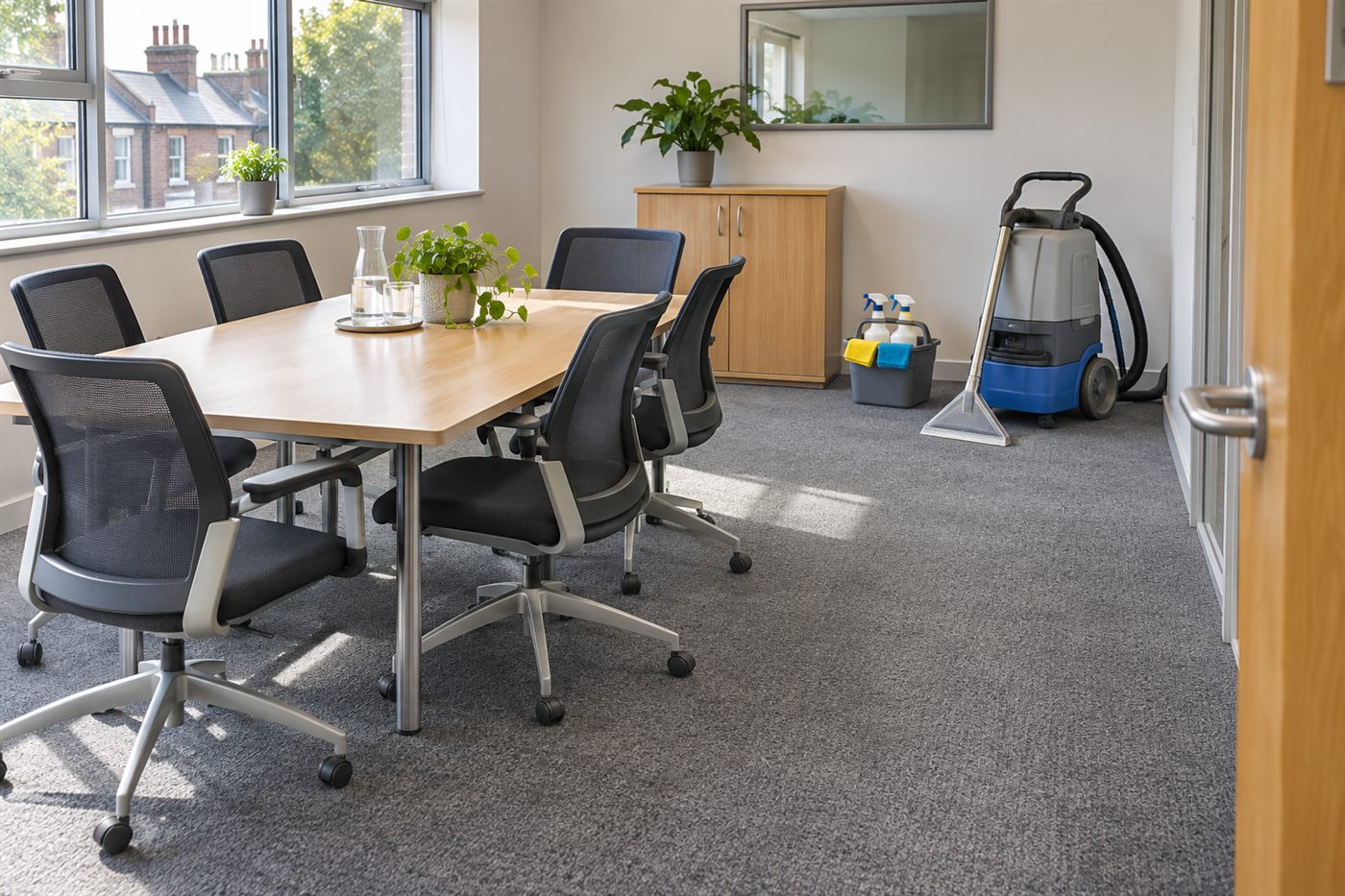
Carpet cleaning in a busy workplace succeeds when the floor can be treated and left alone long enough to dry. Foot traffic, furniture and building access affect the result as much as the machine. Plan the work as a sequence of zones, with a named person deciding when each area returns to use. Start with the carpet specification and a realistic map of how people move through the building.
Identify the carpet and its care rules
Ask facilities or the landlord for the manufacturer, fibre, backing, installation date and maintenance guide. Distinguish carpet tiles from broadloom and mark any recently replaced sections. Interface’s carpet tile guide describes specific cleaning methods and warns against over wetting. The Carpet and Rug Institute publishes a commercial maintenance standard. These are useful references, but the installed product’s own warranty and care requirements should guide the contractor.
List earlier treatments, stain removers and recurring problems. A pale patch may be dye loss rather than a spill. A dark line at the edge of a desk may be soil carried by traffic. Photograph questionable areas before work begins. If tiles are loose, seams are lifting or there is a water leak, arrange repair or diagnosis rather than covering the issue with a cleaning plan.
Map traffic and priority zones
Draw a simple floor plan showing reception, corridors, meeting rooms, desk clusters and exits. Mark the busiest routes, including the path from outside doors and kitchens. These areas may need more frequent attention than low use rooms. Note carpet under fixed furniture, beside server equipment and near confidential storage. A map lets the provider propose a method and schedule by area rather than guessing from a total floor size.
Decide whether the visit covers only visible traffic lanes or a full room clean. Moving a few chairs is different from emptying an open plan office. Identify stains that need individual assessment and mark areas where a portable machine cannot reach. Agree what happens to entrance mats and whether hard flooring is in scope. The work order should make every boundary clear.
Choose a workable time
Compare the expected cleaning and drying period with the building’s actual use. An evening slot may work for a meeting room that stays closed the next morning, while a reception corridor might need a weekend. Consider deliveries, security rounds, cleaners, contractors and staff who work late. Tell the carpet contractor about all of them. A sign on a door will not protect a floor if it is the only route to the exit.
Agree the sequence so a safe alternative route remains open. Do not block fire exits or accessible routes. If the floor plan cannot support a large closure, split the work into smaller visits. Give staff a clear notice showing the areas and times affected, where to enter and whom to contact. Make one facilities person responsible for authorising changes on the day.
Prepare furniture and equipment
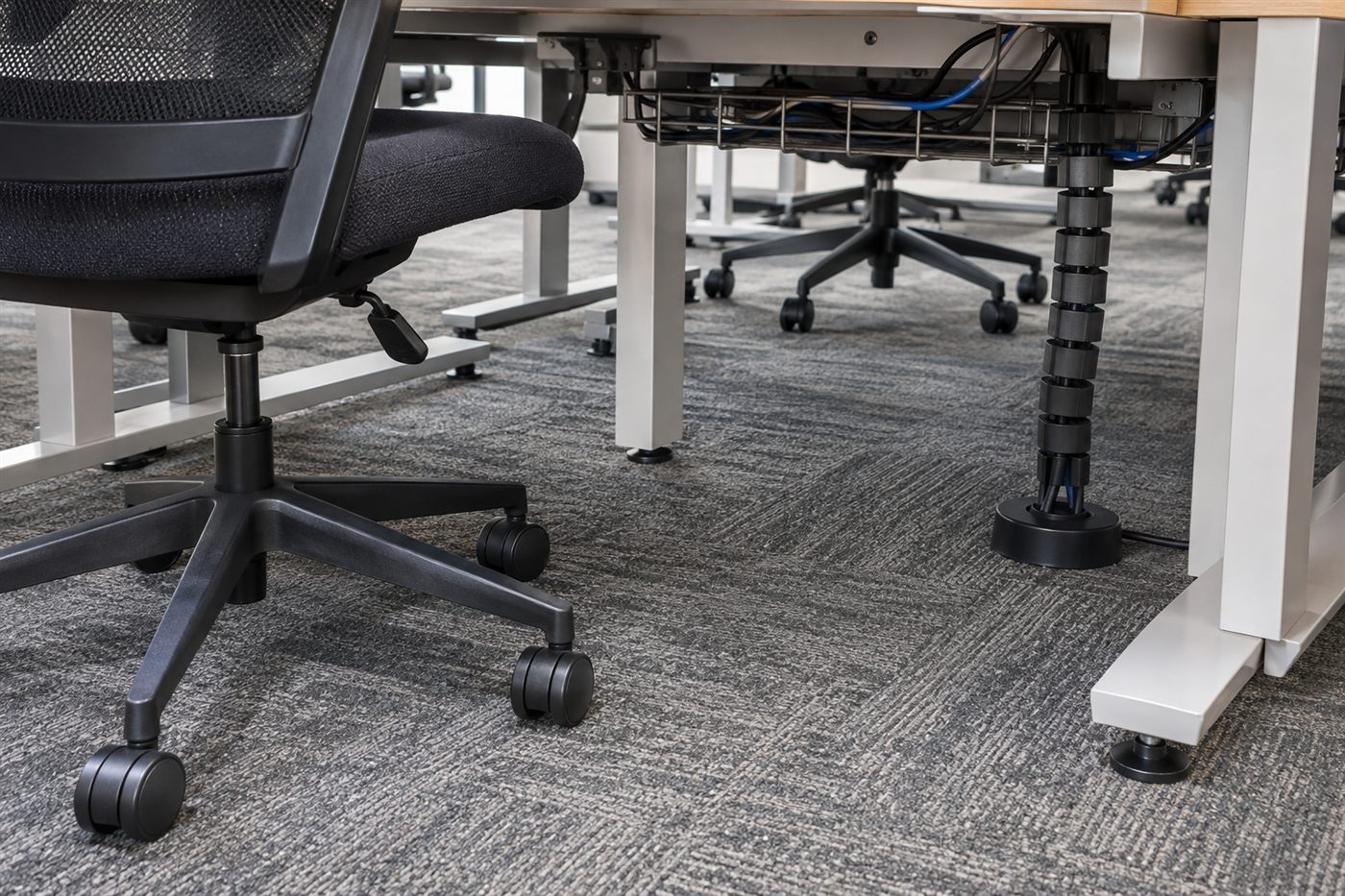
Ask the contractor what can remain in place. Have staff clear personal items, papers and small bins from the floor. Decide who moves rolling chairs, light tables and heavy cabinets. Label cables and keep electrical equipment under the office team’s control. Avoid dragging metal furniture over carpet or placing it on a damp surface after cleaning. Where furniture stays, agree the untreated footprint.
Check access to water, power, lifts and loading areas. Tell the team about narrow doors or security checkpoints. Protect confidential documents and private workspaces before external workers arrive. If a room contains specialist equipment, discuss the boundary with its owner rather than assuming it can be treated like a general office.
Plan for drying and return to use
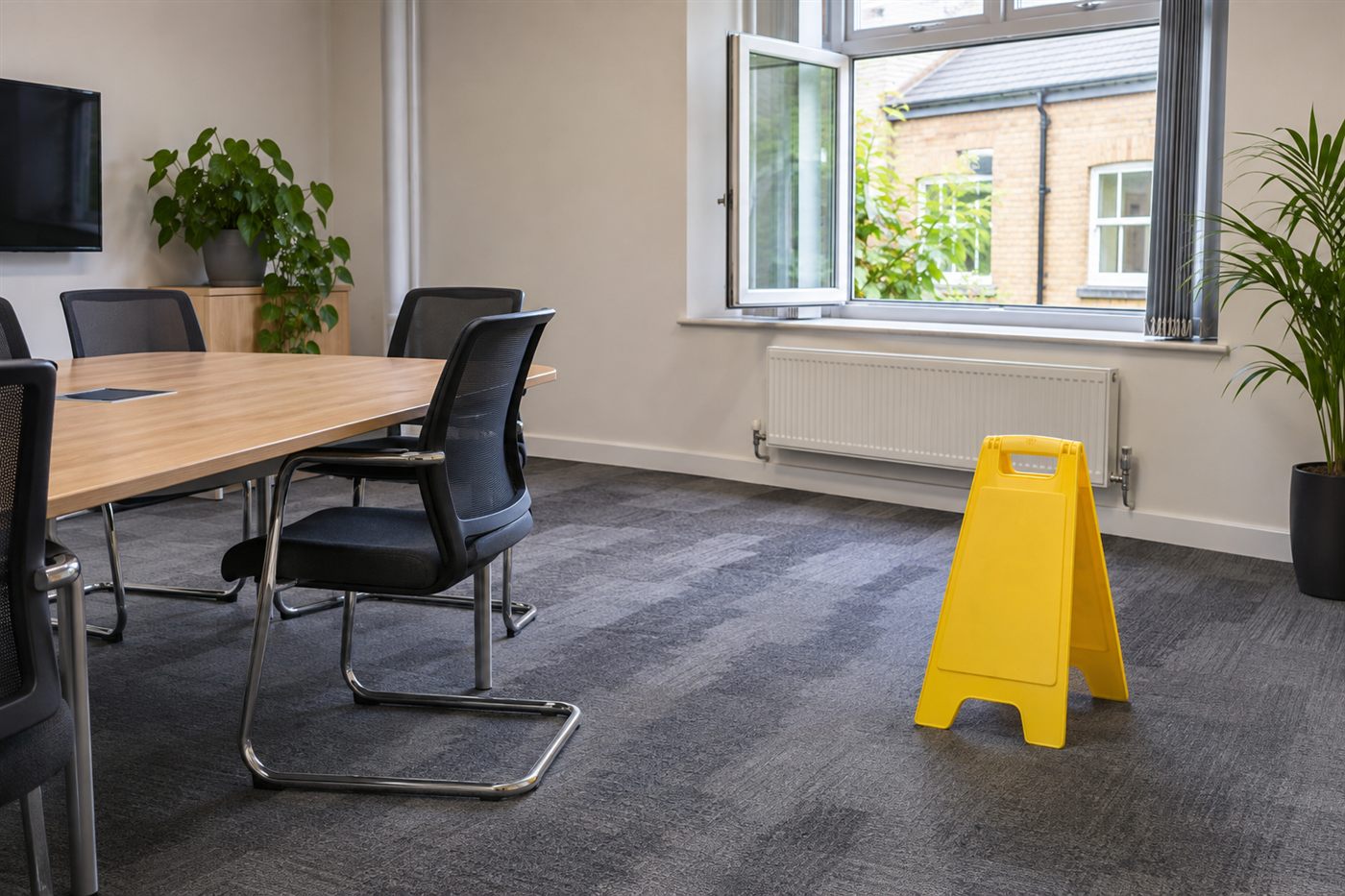
Interface advises leaving its carpet tiles to dry as long as possible and keeping foot traffic off until they are completely dry. Its guide notes that fans may help reduce drying time and that over wetting should be avoided. Ask the contractor for a drying estimate based on the chosen method, ventilation and conditions. Treat it as an estimate, not a fixed reopening promise.
Confirm that heating and ventilation can run during the cleaning window. Plan barriers or signs that direct people along another route. Do not put chairs, boxes or mats back before the contractor confirms the carpet is ready. Early traffic can soil a damp area again and may affect the pile. Check that castors and shoes are clean before furniture returns.
Inspect and record the result
Walk each zone with the contractor before reopening it. Note any remaining stains, damp areas or changes in appearance. Some marks may need a separate stain treatment; others may be permanent. Record the agreed follow up and photograph any pre existing defect that remains visible. Confirm that furniture and equipment are back in their agreed positions.
Keep a log of the date, method, products where relevant, drying time and areas treated. It helps plan future visits and supports a carpet warranty. Continue routine vacuuming and entrance mat care between deep cleans. A periodic extraction cannot compensate for grit being carried through the same busy doorway every day.
Build a concise contractor brief
For commercial carpet cleaning, send a floor plan, carpet details, approximate area, stain photos, furniture responsibilities and the available closure window. If routine services also operate in the building, coordinate their tasks through contract cleaning so they do not cross a wet zone. Agree who signs off each area and communicates reopening to staff. A realistic traffic plan protects the clean and keeps the workplace functioning.
Handle special areas separately
Not every carpeted space belongs in the same cleaning batch. A reception entrance may hold road grit and moisture; a boardroom may have drink stains but little traffic; a quiet room may contain soft furniture that must also be moved. Record these differences so the contractor can assess the soil and use the care method suitable for each surface. If a carpet tile is badly damaged, ask the facilities team whether a spare tile is available. Replacing a damaged tile may be more sensible than repeated spot treatments. Do not lift tiles yourself unless the installation system and building owner allow it.
Check thresholds, floor boxes and loose cable covers. Tell the contractor if a carpeted area borders timber or another moisture sensitive floor. Agree how these edges will be protected. A floor box should remain closed and be managed under the building’s electrical procedures; cleaning liquid must not be directed into it. Where the carpet is beside a glass entrance, consider whether rain could rewet the area before it has dried. Temporary mats can help after reopening, provided the contractor confirms the surface is ready and the mats will not trap moisture.
Make the next visit easier
After reopening, regularly note which zones soil fastest. Busy corridors may need more attention than quiet rooms. Keep the manufacturer guidance, cleaning record and spill reporting contact available to staff and future contractors.