
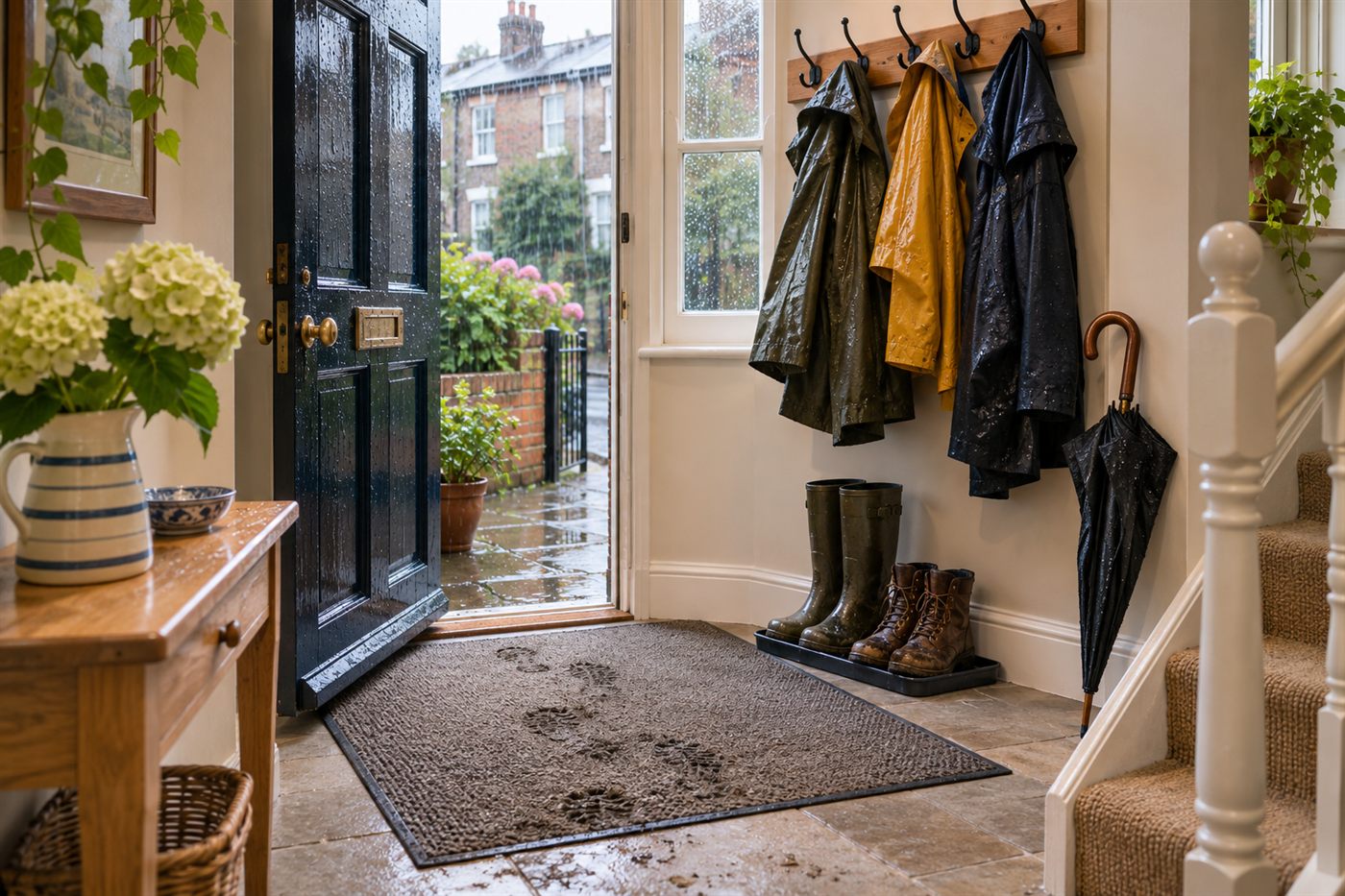
Wet shoes can bring water, grit and leaves through an entrance hall in minutes. The aim is to catch most of it at the door, remove loose dirt without grinding it into the floor and keep a safe route for people entering and leaving. The right method depends on the floor material and the mat backing. A simple wet weather routine protects the finish and avoids creating a slippery patch while cleaning.
Set up a useful entrance zone
Place a suitable mat where people can pause and wipe their shoes, without blocking the door or creating a raised edge to trip over. Check the mat maker’s instructions and the flooring maker’s compatibility advice. Karndean recommends entrance matting to catch grit and moisture for its floors, but notes that some synthetic rubber or PVC backings may discolour its vinyl. A mat that traps dirt must also suit the floor beneath it.
Provide a stable place for wet shoes and umbrellas if space allows. Keep the route to the stairs and main rooms clear. A tray may catch drips, but empty it before water overflows onto the floor. Do not stack shoes where someone must step around them in poor light. A small organised zone is easier to clean than scattered wet items.
Identify the floor before mopping
Find the flooring product or care sheet if possible. Timber, laminate, luxury vinyl, tile and stone have different moisture and cleaner rules. Quick Step advises a doormat at external doors for its laminate and gives specific maintenance instructions by range. Do not assume a floor is waterproof because it looks like tile or because a neighbouring room has a similar pattern.
Look for lifted edges, gaps, worn sealant or scratches that could hold moisture. Photograph damage before cleaning. If water has gone beneath a floor covering or a board is swollen, ask for appropriate repair advice. A routine mop cannot dry material hidden below the visible surface.
Remove grit before any damp wipe
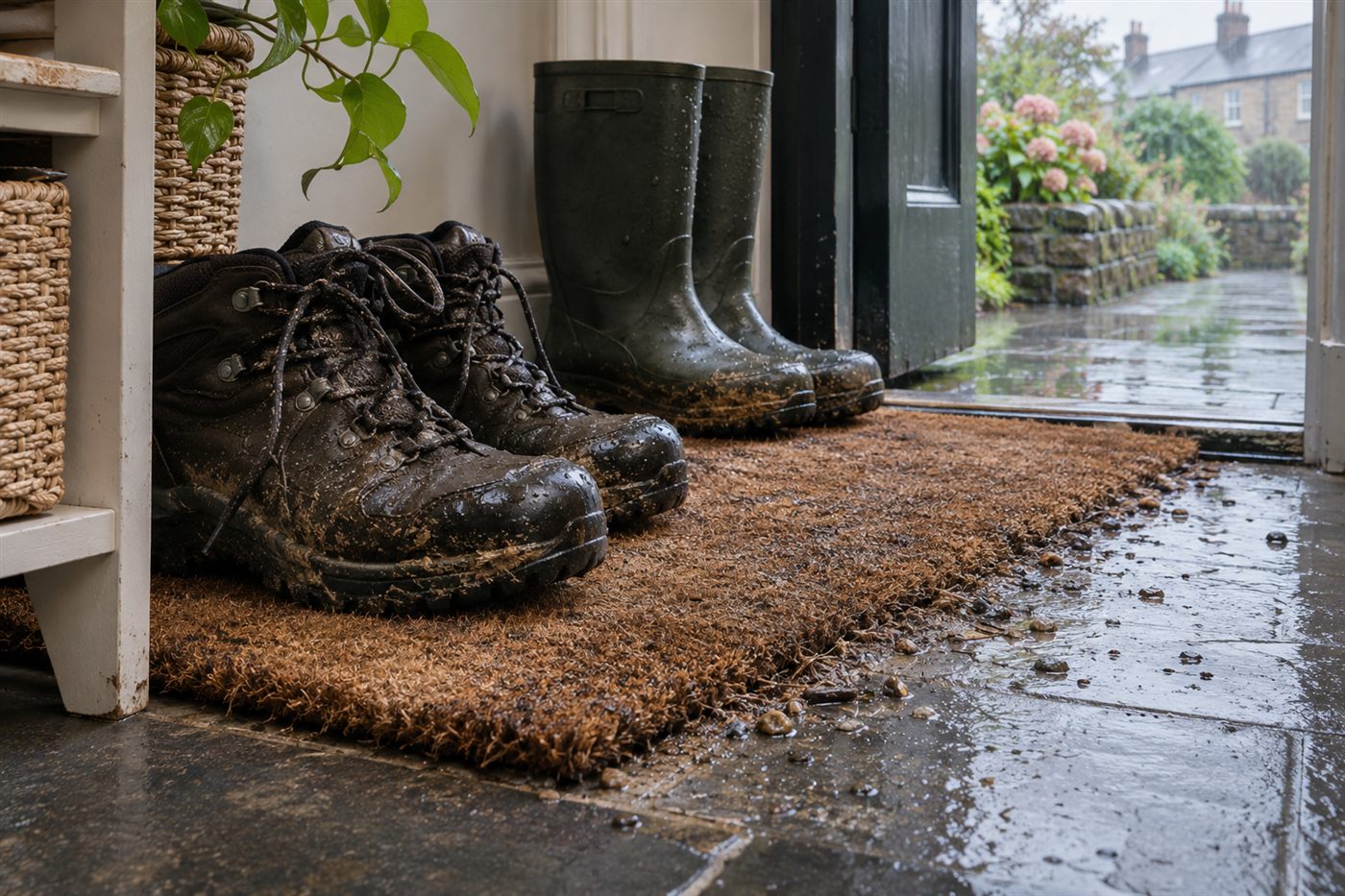
Let mud dry enough to lift without smearing it, where safe to do so. Sweep or vacuum loose grit using a tool permitted by the flooring maker. Check the brush and wheels for stones that might scratch. Start at the outside edge and work inwards, collecting leaves and sand before they are walked farther into the home.
Empty or shake a removable mat according to its care instructions, away from the clean hall. A saturated mat may need drying or replacement before it can catch more water. Do not drag a wet mat across a timber or laminate floor. Lift it with help if heavy, then check and dry the floor underneath.
Act on puddles promptly
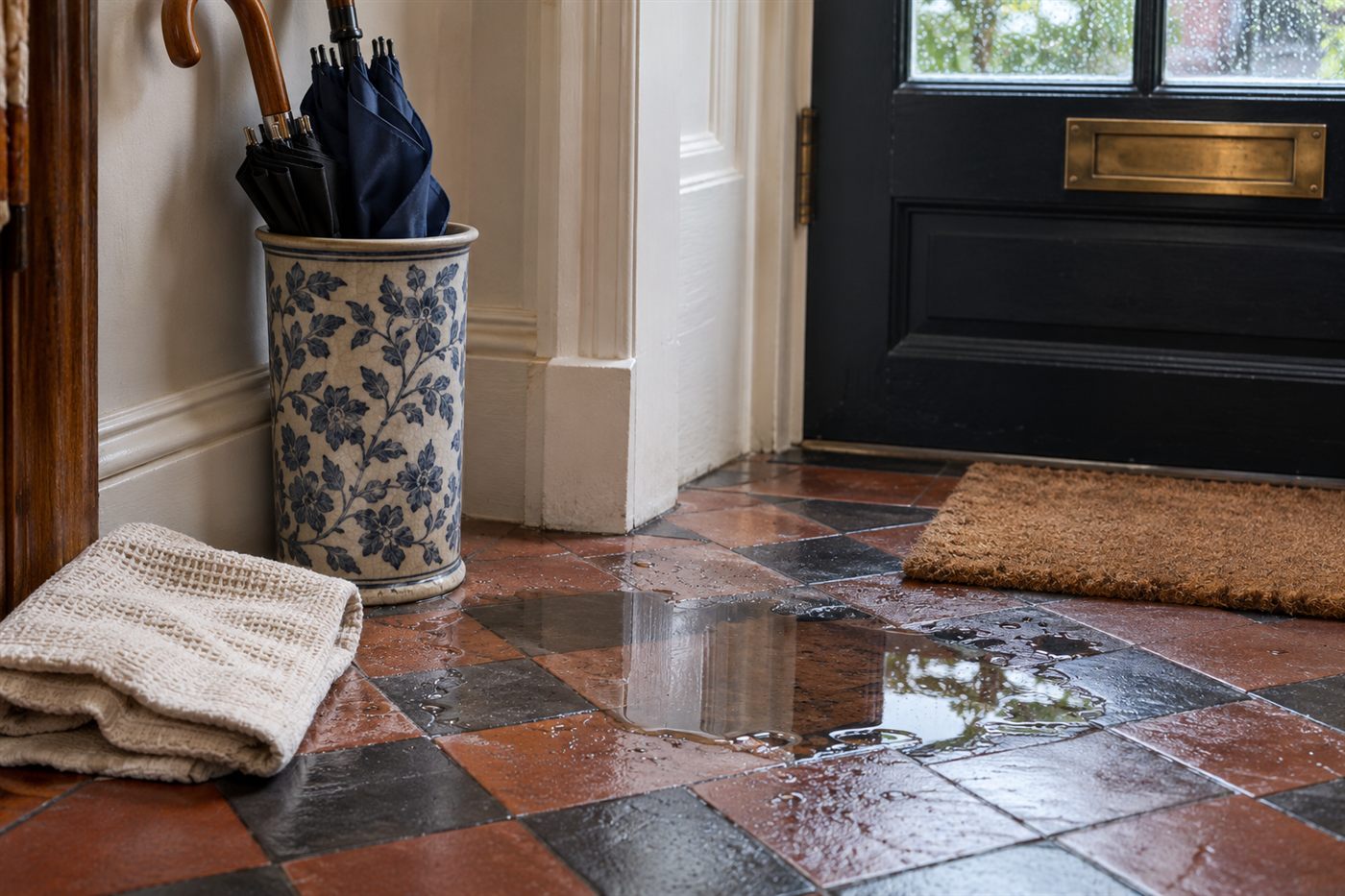
Use an absorbent cloth or suitable dry mop to lift standing water. Keep a clear dry path while you work. The Health and Safety Executive notes that smooth wet floors can be slippery and advises cleaning in sections or excluding people until the surface is dry. In a home, tell others which part of the hall is wet and avoid leaving a bucket across the doorway.
Do not push water towards a wall, skirting board or floor joint. Blot it from the centre and check the edge of the mat. If a puddle returns, look for a leaking umbrella, wet footwear or a door gap. A repeated water source should be addressed rather than mopped indefinitely.
Use the finish approved cleaning method
Once loose debris and water are gone, use the product and amount of moisture approved for the floor. Karndean recommends its specified cleaner or an approved pH neutral product for its vinyl; Quick Step lists its own laminate maintenance method. These are examples of why identifying the floor matters. A strong household cleaner may leave a slippery film or affect the finish.
Apply a controlled amount with a clean tool. Work in short sections so one route remains usable, then dry or let each area dry fully as the maker directs. Do not use a steam mop merely because the floor is hard; some materials or ranges do not permit steam. Read the exact instructions, especially at thresholds where two floor types meet.
Keep the mat effective
A mat full of grit can become a source of abrasion instead of protection. Clean or launder it on a schedule suited to its material, and dry it completely before putting it back. Check that the corners lie flat and the backing has not deteriorated. Replace a mat that slides, curls or leaves colour on the floor.
During several rainy days, a second suitable mat may help catch water before people reach the main floor. Karndean notes that extra matting can be useful in wet weather. Check that added mats do not create a maze or narrow the route. A long enough stable mat may be better than several small loose ones.
Protect the surrounding finishes
Wipe splashes from painted skirting and the lower door under their own care instructions. Do not leave a wet coat touching a wall, or shoes against a timber cabinet. Check the bottom of a radiator or bench near the entrance for drips. These surrounding materials may be more vulnerable to standing moisture than the floor itself.
Clean a raised threshold’s grooves with a soft tool that protects the door seal. Grit trapped there can return to the floor on shoes. Dry the threshold and check that the door closes freely. Rainwater entering below it may signal a damaged seal or fitting. Photograph the issue and arrange repair; indoor mopping cannot keep up with water that continues to enter. Check the maker’s guidance before using moisture near timber.
Keep pets away from wet cleaning products and allow the floor to dry before they return. If a guest has difficulty with steps or narrow routes, move the shoe storage rather than asking them to cross a crowded hall. A safe entrance works for everyone who uses it, not only the person cleaning it.
Build a short wet weather routine
After a rainy day, check the mat, lift any puddles, collect grit and empty the shoe tray. Once a week, inspect the mat backing and the floor beneath it. This quick routine usually prevents a thick dirty line at the threshold. Keep a soft cloth nearby so a fresh spill is handled before it spreads.
For regular cleaning in Guildford, identify the floor material and mat restrictions. A hard floor cleaning enquiry can address a larger area or built up residue, with the finish and condition described in advance. A professional visit should use the same material specific care as the household routine.
Finish by checking the whole route from the front door to the next room. The mat should be dry enough to work, the floor clear of grit and any washed section safe to walk on. Containing wet weather at the entrance makes the rest of the home easier to maintain.