

A shopfront clean has to fit around customers, staff, deliveries and the public route outside. Clear glass matters, but so does the space needed to work without creating a wet entrance or blocking a doorway. The best time is not automatically the earliest available appointment. It depends on opening hours, access to both sides of the glazing and the surrounding pavement. A short site brief helps the business and cleaner agree a practical window before equipment arrives.
Map the panes and their sides
List the entrance door, display glass, side panels and any internal partitions. Say whether you want the inside, outside or both faces cleaned. A mark that looks external from the shop may be on the room side, while mist trapped within glazing cannot be removed by surface cleaning. Include frames and sills only when they are part of the agreed work.
Note special films, signage and coated panels. Find care instructions for them before selecting a cleaning method. Adhesive left by a display, paint and scratches are different from ordinary fingerprints. Do not assume a scraper or stronger product is suitable. Photograph unusual residue with enough surrounding context to show which pane is affected.
Keep a site sketch if the frontage has entrances or panes that look alike. Label the door used by customers, the display glass and any upper section, then mark the faces included in the request. This is helpful when a manager who arranged the job is not present during the visit. It can also show where a delivery trolley stops or where a queue forms. The sketch does not replace a site assessment; it gives the cleaner and business a starting point for one.
Choose the quietest workable slot
Compare the likely cleaning time with deliveries, staff arrival and customer peaks. An early appointment can work well if someone can provide entry and the pavement is available. A later visit may suit a shop with a busy morning, but light and access can be different. Agree the actual window rather than writing “before opening” when suppliers use the entrance at the same time.
Ask who will unlock internal areas and remain reachable. If the cleaner arrives before staff, record how access will be provided and who will secure the shop afterwards. Do not leave alarm details or key locations in a public work note. A delayed delivery or an early queue may require the agreed sequence to change, so identify a contact who can make that decision.
Keep the entrance usable
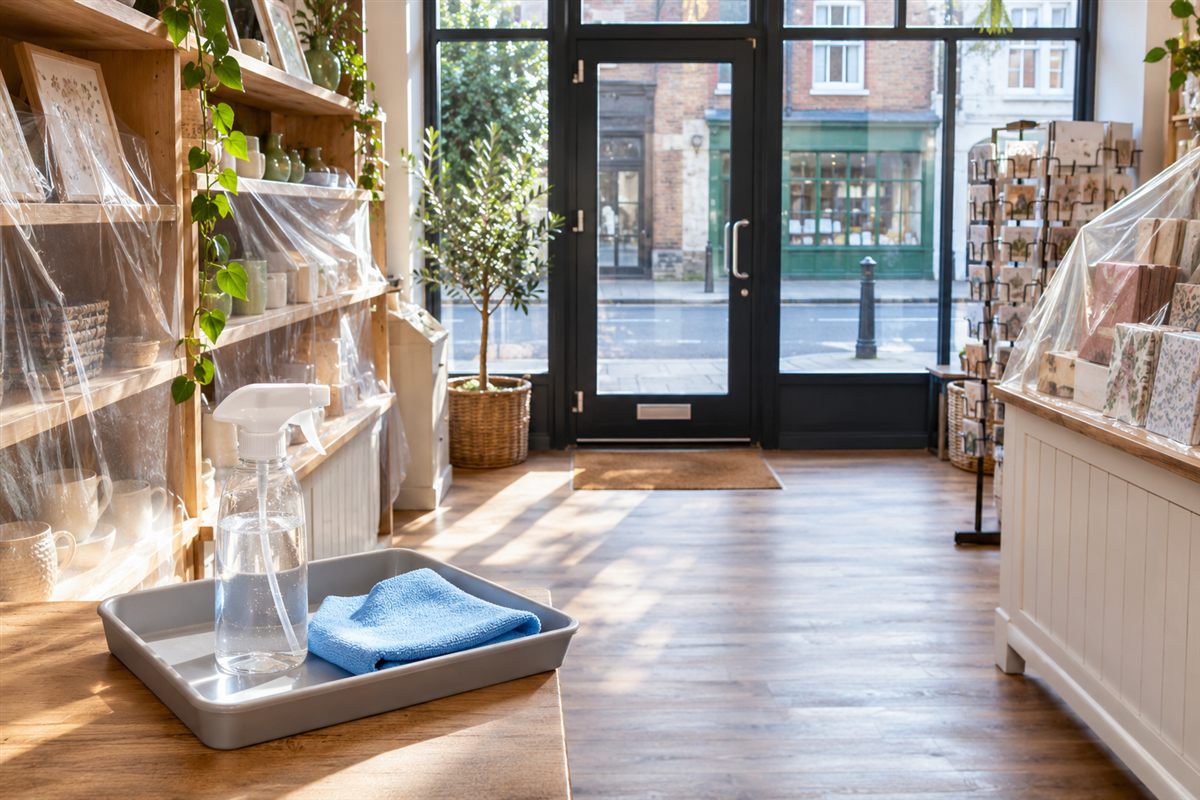
Walk through the likely customer route. Where will people enter while the door glass is being cleaned? Can equipment be placed without blocking the threshold, a fire exit or a display? The Health and Safety Executive notes that cleaning can create slip and trip hazards for customers and staff, especially where floors remain damp or cables cross a route. The business and provider should agree how the work area is managed.
A warning sign alone may not make a wet path safe. Consider timing, a dry method where suitable, and keeping pedestrians away until an affected surface is ready. Do not create a route that sends customers around the work and into traffic or another hazard. If there is no practical safe space, reschedule the task or divide it into sections.
Consider the pavement and public space
Describe the width and use of the outside route, including nearby doors, a bus stop, loading area or another business entrance. A commercial window cleaner needs to choose a method and manage the space appropriately. HSE guidance on window cleaning highlights timing, traffic and preventing public access beneath higher work. The shop owner can provide the local pattern of use; the provider must assess the work method.
Do not assume a ladder can be placed on a crowded pavement for a quick upper pane. Height, weather, ground conditions and access equipment require their own plan. If the glazing is beyond straightforward ground level reach, identify it separately in the enquiry. Do not ask staff to lean from an upstairs window to complete an outside edge.
Prepare the inside without dismantling displays
Move small items that block the agreed glass, keeping prices, stock and fragile objects under the business’s control. A window display may need its own staging plan before cleaning can reach the pane behind it. State what may be moved and what must remain untouched. Do not expect the cleaner to decide which merchandise can be placed on the floor.
Protect electrical fittings, illuminated signs and payment equipment from liquid. If a unit needs disconnection or repair, arrange that separately with an authorised person. A cleaner should not unplug unfamiliar equipment or dismantle a display to reach a mark. Keep private customer information and staff paperwork out of the working area.
Set material and result expectations
Ordinary glass residue, dusty frames and fingerprints may be suitable for routine cleaning. Etched glass, damaged film, condensation inside a sealed unit and old adhesive need different assessment. Describe the concern instead of promising that one appointment will restore every pane. A small test may be needed where a coating or cleaner is uncertain.
Check the proposed products against glazing and frame guidance. Metal, painted timber, plastic and stone sills do not necessarily share a cleaner. Keep product off nearby stock and flooring. If one pane has a restriction, mark it clearly in the brief rather than assuming the whole shopfront can be treated identically.
Agree how completion is checked
At the end, review the agreed panes and sides from normal viewing positions. Check frames or sills only if included. Note any inaccessible or restricted area while the reason is clear. A photograph can document a particular remaining mark without implying that every trace is removable. Discuss it promptly with the provider and keep damage or repair questions separate.
Return displays only after nearby surfaces are ready. Make sure the entrance route is clear of tools and moisture before normal foot traffic resumes. If the shop opens while work is still under way, follow the agreed access plan rather than assuming customers will avoid a bucket or wet threshold on their own.
Brief the right service
For commercial window cleaning in Guildford, provide pane sizes, sides, height, opening hours, outside access and any film or unusual residue. If staff areas and floors also need attention, discuss them under commercial cleaning. A regular specification may be better handled through contract cleaning, with periodic glazing and review points written down. A site brief lets each visit fit the way the business operates.
Review the first appointment against the proposed time and customer route. Adjust the window if deliveries, queues or weather repeatedly interrupt it. Keep care information for the glazing and note any repair or film issue that needs separate attention. Clean glass is useful only when the work can be carried out around the people who use the entrance.