
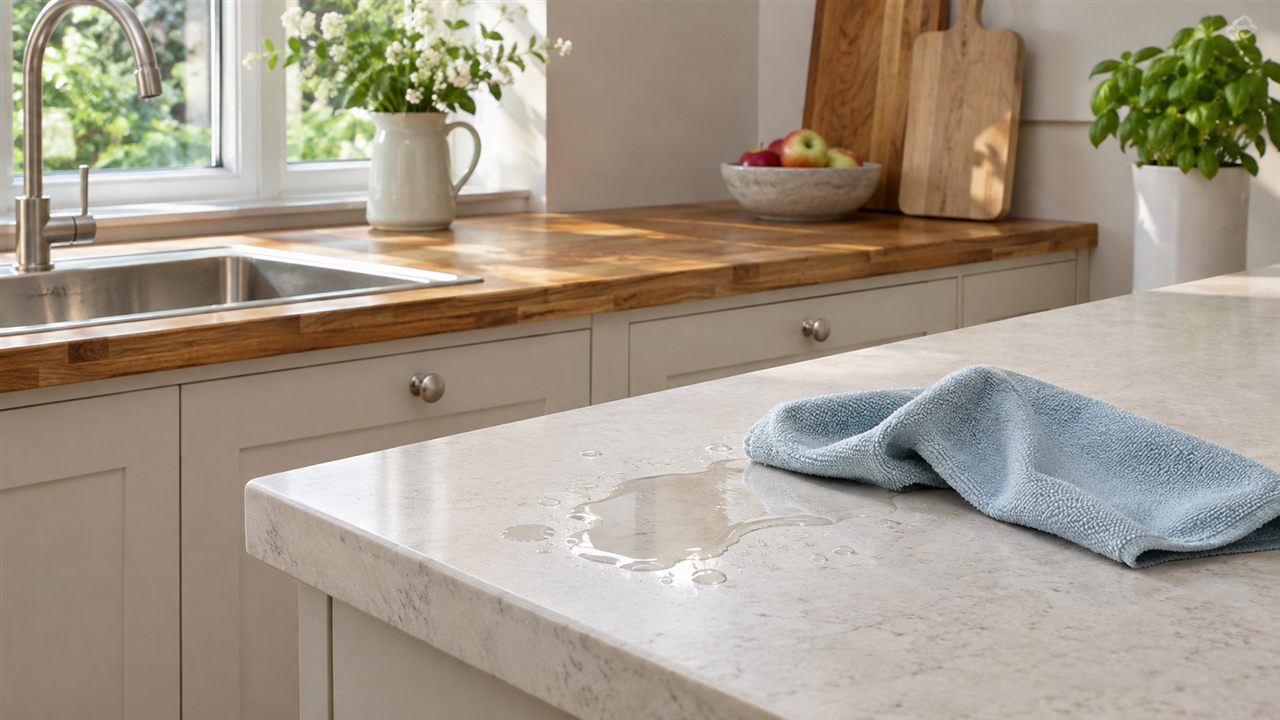
A spilled drink on a kitchen worktop invites a quick wipe, but the safest follow-up depends on what the surface is made from. Laminate may hide a vulnerable joint, timber may have an oil or lacquer finish, and stone or engineered quartz can have different care rules. Begin by containing the spill and checking the worktop guidance. This article is about fresh ordinary household spills, not unidentified chemicals, damaged surfaces or a promise that every stain will disappear.
Stop the spread before choosing a product
Move food, small appliances and paperwork away from the wet area. Lift loose solids gently with a suitable soft tool rather than dragging grit across the finish. Blot or wipe up the liquid promptly with a clean absorbent cloth. Work towards the centre if it is spreading. Keep it from collecting around a sink cut-out, joint, hob edge or the underside of an overhang.
If the substance is an unknown cleaner, solvent or other hazardous liquid, follow its label and seek suitable advice. Do not add another chemical to neutralise it. Keep people away from a spill that could irritate skin or make the floor slippery. For an ordinary drink or cooking splash, the immediate aim is to remove bulk liquid without rubbing it into a larger area.
A first minute checklist can keep a small accident from becoming a product experiment. Identify the spill and keep anyone from spreading it. Lift loose solids with a soft edge, then absorb the liquid with a clean cloth. Check joints, cut-outs and nearby objects before they become wet. Put the used cloth aside rather than returning it to the sink or wiping another surface with it. Only then decide whether the approved routine cleaner is needed. This order is deliberately simple so it can be followed before the care sheet is found.
Identify the actual worktop
Look for installation records, spare offcuts or the supplier’s care sheet. A marble pattern may be printed laminate, engineered quartz or natural stone. A timber top can have oil, wax or lacquer, each with its own restrictions. Do not infer the material solely from colour or the weight of a cabinet. If the finish is unknown, avoid strong products and ask the installer or manufacturer before further treatment.
Keep a note of any sealer, polish or renovation product already applied. A residue from earlier care may change how a fresh spill appears. A discreet test can help where the care guidance requires one, but it does not override a stated prohibition. Photograph a mark before applying something new so you can explain what changed.
Protect laminate joints and edges
Formica describes mild detergent and water for ordinary laminate cleaning, with a clean rinse and soft drying cloth. Its worktop construction guidance also highlights the importance of sealed exposed edges. A laminate face can resist a small spill while an unprotected seam or cut-out remains vulnerable. Remove liquid from those areas promptly rather than leaving a wet cloth pressed against them.
Use a method approved for your particular laminate and finish. Avoid scouring pads and harsh abrasive agents. Formica warns against acid based ceramic cleaners and limescale removers on its decorative laminate. A bathroom descaler is therefore not a sensible shortcut for a kitchen worktop mark. If an edge swells or lifts, cleaning cannot flatten the substrate; ask for repair advice.
Treat timber as a finished material
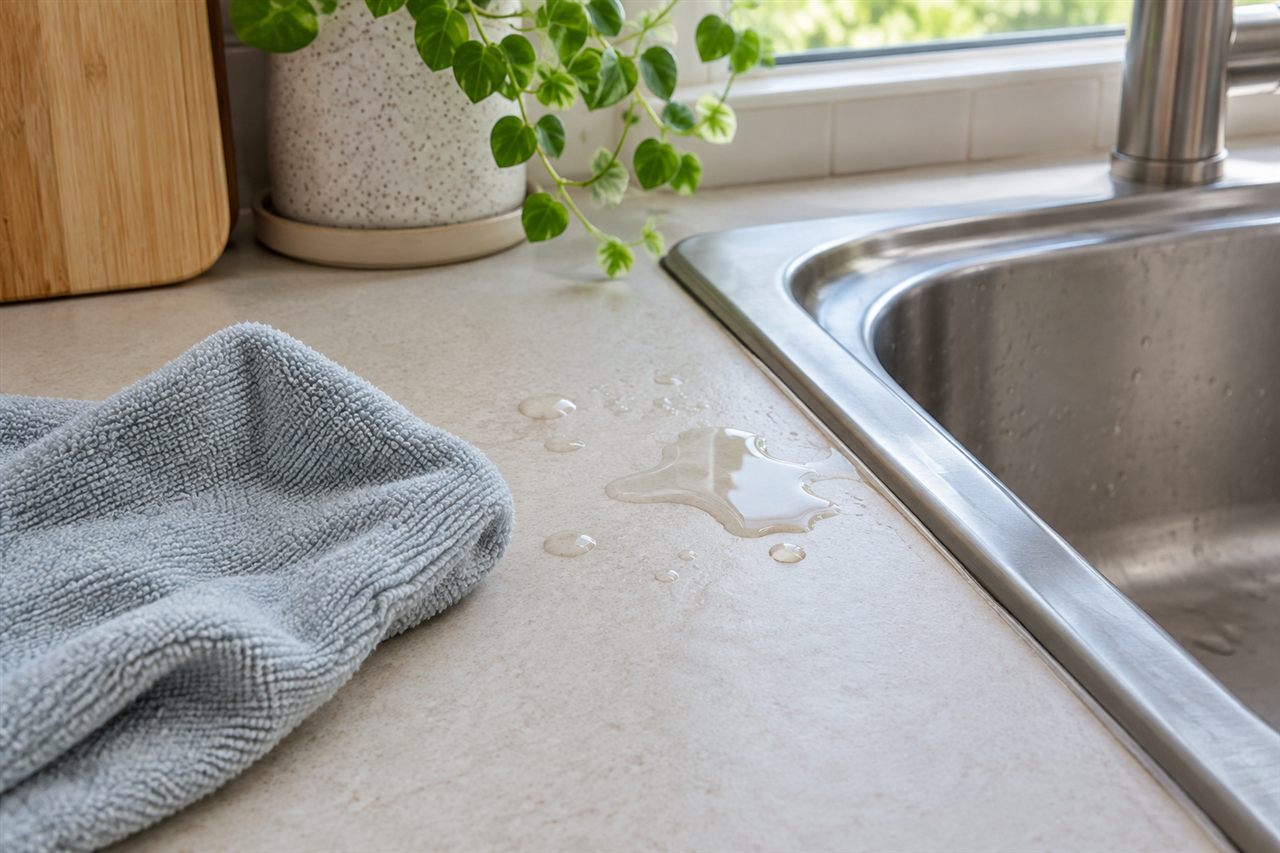
Check whether the wood is oiled, lacquered or finished another way. Remove standing liquid promptly and use only its specified routine cleaner. Do not flood the grain, leave a wet cloth around a joint or place a hot pan on the area while it dries. A dark patch may have entered the finish, while a pale ring may indicate a different problem. Neither is necessarily removable surface dirt.
Follow the installer or coating maker’s instructions for any maintenance treatment. Do not sand, bleach or re-oil a local mark as a first response to a fresh spill. Those steps can change colour and sheen over a larger area. If water has reached an unsealed cut edge or the timber has warped, seek material specific assessment.
Check stone and engineered surfaces separately
Natural stone varies by type and treatment. Cosentino’s Sensa granite guidance advises drying spills promptly and avoiding very acidic or alkaline products for that surface. Other stones and sealers may differ. Do not use vinegar, lemon juice or a descaler because a mark resembles limescale. An etched patch is damage to assess, not a deposit to scrub harder.
Engineered quartz has its own maker guidance. Caesarstone recommends wiping liquid spills and gives routine cleaning advice for its quartz surfaces. That does not make every quartz brand identical or grant permission for all household chemicals. Check the product and finish, then use an approved method. Keep hot cookware on a suitable trivet and avoid scraping with metal tools when dealing with a sticky spill.
Use the least involved permitted follow-up
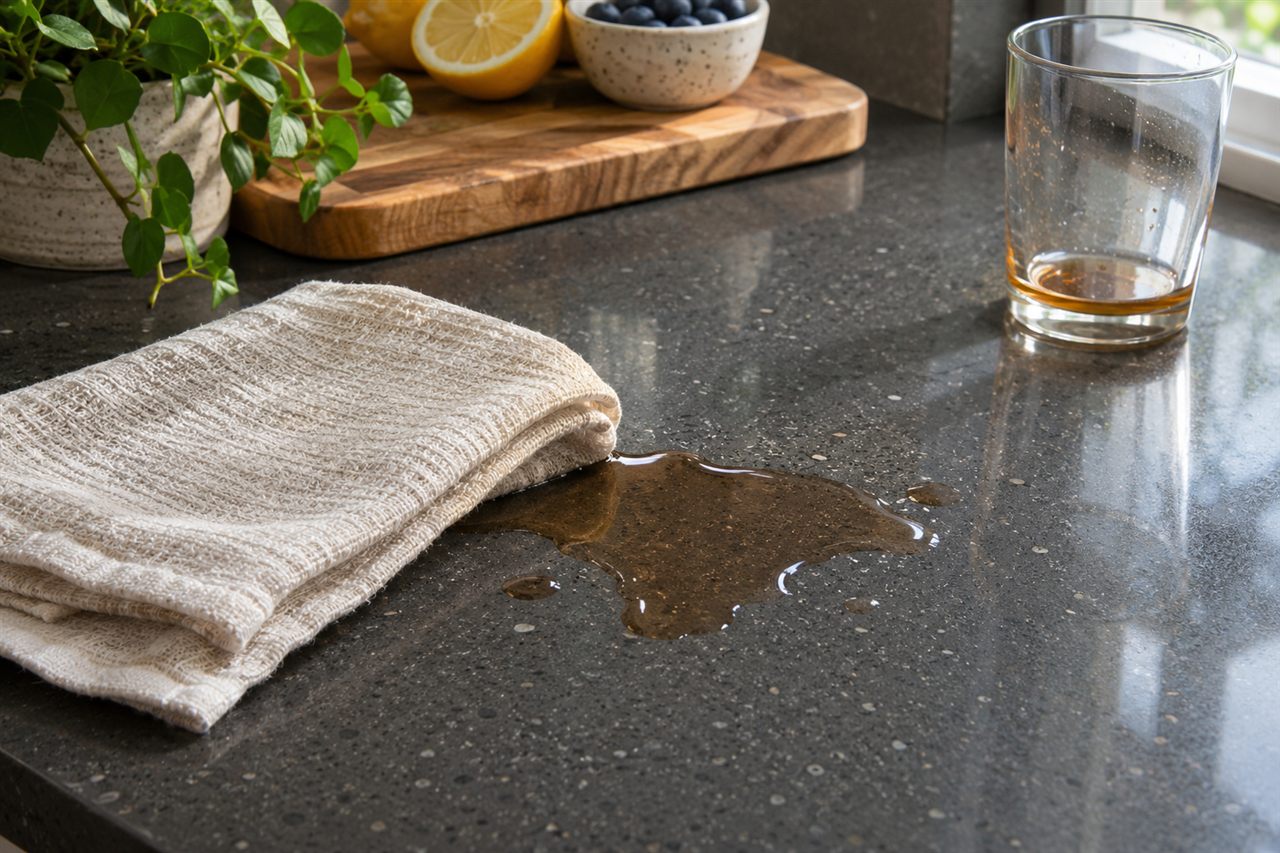
Once the bulk spill is gone, check whether the area needs a maker approved cleaner or simply a damp cloth. Follow dilution, contact time and rinsing instructions. Change cloth faces instead of moving colour or grease repeatedly across the same patch. Dry the surface as required, including accessible edges. Inspect it in normal light after the area has dried; wet stone and timber can look different from their final appearance.
Do not layer several products because the first pass left a mark. A stubborn patch, colour transfer or changed sheen is a reason to stop and describe the material and spill to an appropriate specialist. Keep packaging for anything already used. A clean result may still show an old scratch, heat mark or worn coating that predated the accident.
The position of a mark matters when asking for help. A patch beside a sink may involve water beneath a seal, while a cloudy area beside a hob could have a heat or product history. Take one photograph of the worktop and another of the spot. Note when it appeared, what was spilled, and the products used afterwards. That record helps distinguish a cleaning question from a repair question.
Make everyday spills easier to handle
Keep a soft cloth and the correct care guide where the household can find them. Wipe fresh splashes before they sit at a joint. Use a chopping board and trivet according to the worktop instructions, and do not store a leaking bottle near an unfinished edge. If several people share the kitchen, identify one permitted routine product rather than collecting conflicting bottles beside the sink.
When asking about deep cleaning in Guildford, describe any worktop mark separately from general kitchen build-up. For regular accessible surfaces, domestic cleaning can be scoped around the actual materials. Provide the maker, finish, photographs and product history. The useful response to a spill is prompt, controlled care, followed by an honest assessment when cleaning reaches its limit.