
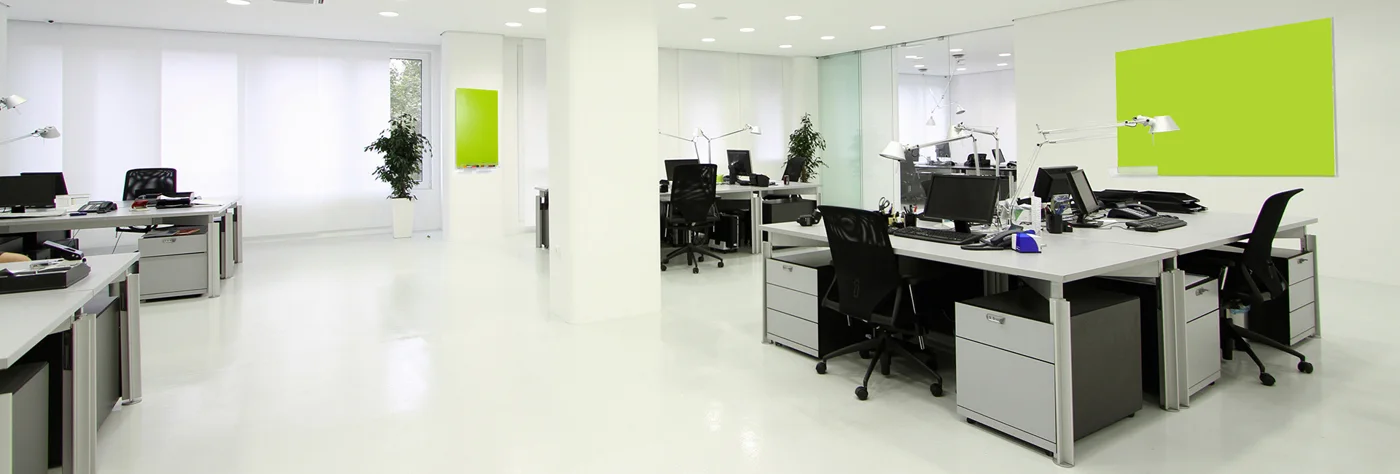
An office cleaning routine becomes difficult when nobody knows who is responsible for the small jobs. Cups stay on desks, the kitchen bin fills before lunch, and a meeting room looks untidy just before visitors arrive. A useful routine makes the responsibilities visible. It also gives cleaners access to the surfaces they have been asked to clean.
Start with the way the office is actually used. A small team that visits twice a week will have different priorities from a busy workplace with frequent visitors. You do not need a long policy document to begin. You need an agreed list of areas, a practical schedule and one person who can resolve questions about it.
Walk through the office before writing the checklist
List the spaces people use: workstations, meeting rooms, reception, kitchen, toilets, corridors and storage. Add less obvious places such as a print area or shared telephone booth. Note which rooms are normally occupied and when. A cleaner cannot safely work around a meeting that everyone assumed would finish an hour earlier.
Look at the surfaces as well as the rooms. Carpet, hard flooring, a wooden desk and a monitor require different care. Check equipment instructions and any restrictions from the landlord or facilities manager. Identify what is outside an ordinary office clean, including specialist machinery, server rooms, high-level access and any hazardous material.
Separate personal habits from cleaning work
Agree that staff remove their own cups, food and loose belongings from work surfaces. Decide who handles washing-up, the dishwasher and food left in the fridge. These tasks can be assigned to a cleaning provider if agreed, but they should not become silent assumptions. A clear desk gives the cleaner a usable surface.
Do not ask staff to put confidential papers into a general tidy-up pile. Establish an approved place for documents and personal items before cleaning begins. Cleaners should not be expected to guess which notes may be moved or discarded. This is particularly important around shared desks, reception paperwork and meeting rooms used for sensitive conversations.
Choose a short daily list
Your daily priorities should reflect actual use rather than a copied schedule. Busy toilets, bins with food waste, kitchen worktops and entrance floors may need attention more often than a quiet storage cupboard. Write the task precisely enough that someone can recognise whether it has been completed. “Sort kitchen” leaves too much open to interpretation.
A practical list might say empty the agreed bins, wipe the specified kitchen surfaces, clean the toilet areas and deal with loose debris on the main route. Staff duties can sit alongside it, such as leaving the sink clear. Keep the distinction visible so that an unfinished staff task does not obscure whether the cleaner completed theirs.
Put slower tasks on a separate schedule
Some work is easy to miss because it does not look urgent each morning. Skirting boards, accessible ledges, internal glass, chair bases and cupboard fronts can be placed on a periodic list where appropriate. Set the frequency after observing the office, not because every business is said to need the same weekly programme.
Give these tasks a named place in the schedule. If they are always described as “when there is spare time”, they may never happen. Equally, do not promise that every periodic task fits into the existing visit without discussing time. A short rotating list can make progress visible while keeping the agreed workload realistic.
Use one checklist rather than several competing versions
Put the current checklist somewhere accessible to the people who need it. A simple shared document or printed sheet may be enough. Include a version date, the areas covered and the contact person for changes. Avoid keeping one list with reception, another with facilities and a third in an email nobody can find.
Make the wording specific. “Accessible desk surfaces, left clear by staff” is more useful than “all desks”. “Kitchen worktop and sink” should not imply the inside of every cupboard or appliance. Use separate notes for exclusions and periodic tasks. This makes discussions about missed work easier because the agreed expectation is visible.
Plan the visit around access and interruptions
Decide whether cleaning takes place before opening, during occupied hours or after the team leaves. Each option has practical consequences. Early or late visits require an agreed entry and locking procedure. Cleaning during the day means coordinating rooms, noise and floor access. Give the provider information about recurring meetings and visitor periods.
Record which doors can be opened, who controls keys or access cards, and what to do if entry fails. Do not leave an alarm code on a public checklist. Agree how access information is passed securely and who updates it when arrangements change. These details are part of organising the service, not problems to solve at the door.
Make floor cleaning a planned task
People need a usable route through the workplace while floor cleaning happens. Discuss which areas can be temporarily kept out of use and how staff are informed. Wet surfaces, trailing leads and moved furniture can create hazards even during routine cleaning. The plan should reflect the site rather than relying on a sign to settle every issue.
The HSE guidance on slips and cleaning explains why the cleaning process itself needs consideration. Use it to inform a discussion with the responsible site person. This article is a planning guide, not a substitute for the workplace’s assessment or a promise that one checklist establishes legal compliance.
Set boundaries around desks and equipment
Decide whether keyboards, telephones and monitors are included, and check their care instructions. Switching off, unplugging or moving equipment should not be assumed part of an ordinary visit. Screens, specialist devices and unfinished work may have particular restrictions. Make those limits easy to communicate without asking cleaners to investigate individual machines.
For shared desks, ask staff to leave enough space for the agreed cleaning. Provide a clear process for surfaces that cannot be accessed. A note saying a desk was obstructed is more useful than pretending it was completed. It also lets the office contact resolve the cause before the same obstacle appears at the next visit.
Agree the bin and recycling arrangements
Identify which bins are ordinary waste, recycling and confidential material. Confirm where collected bags go and whether access to the waste area is included. Do not expect a cleaner to identify confidential papers by reading them. Secure disposal should follow the business’s agreed process rather than an improvised decision during tidying.
Ask how liners and other supplies are provided and who notices when stock is low. Keep spare materials in an agreed location. Clinical waste, chemical containers and sharp objects do not belong in an ordinary office waste routine without an appropriate arrangement. Staff should know how to report those items safely.
Keep the kitchen rules easy to follow
Choose a clear method for food stored in the fridge, including how forgotten items are identified and who decides what is removed. Agree the treatment of personal mugs and food containers. A cleaner should not be asked to guess whether a lunchbox is unwanted. Write down any cupboard or appliance interior work separately.
Think about the busiest point in the day. If every cup arrives after the cleaning visit, the morning routine cannot keep the sink clear by itself. Staff may need a simple after-lunch habit as well. A schedule should acknowledge that shared rooms change throughout the day rather than judging the whole service from one late-afternoon photograph.
Give feedback through one useful channel
Choose an office contact who can collect concerns and discuss them with the provider. Report the room, the task and the date. A photograph may help with a visible problem, but avoid including confidential papers or personal information. “The reception bin was not emptied on Tuesday” is easier to act on than a general complaint about standards.
Distinguish a missed task from something outside the original agreement. If the team grows, visitor numbers change or an extra room opens, review the specification. The office cleaning service information can help you prepare that conversation. Changes in use may require a different frequency or more time, rather than another reminder on the same list.
Keep occasional specialist work separate
Routine vacuuming does not replace every form of carpet treatment. Mark periodic work such as commercial carpet cleaning separately, including room access and time out of use. Give the provider information about stains, material and any restrictions. Do not assume a routine cleaner can add a specialist task during the usual visit.
When reviewing a continuing arrangement, use the contract cleaning page to consider the specification, supplies and review process. The aim is an agreement people can follow: staff know what to leave clear, cleaners know the expected tasks, and the office contact knows how to record a change without creating another competing checklist.