

Venetian blinds can look straightforward to clean until a slat bends, a cord catches or dust falls back onto a finished window. The useful starting point is the blind’s material and operating instructions. Aluminium, timber and lookalike finishes may need different treatment, and the headrail is not simply another slat. A gentle routine keeps each part supported while you work. If the blind is high, unstable or damaged, arrange safe access and appropriate advice before touching it.
Identify the blind before choosing a method
Find the maker’s label, order information or care sheet. Check whether the slats are aluminium, real wood, coated timber or another material. A wood effect appearance does not establish the construction. Note any restrictions for tapes, cords, headrails and motorised controls. If several blinds were fitted at different times, do not assume that one set of instructions covers them all.
Luxaflex advises dry methods for its wooden Venetian blinds because moisture may warp or discolour the slats. Its guidance permits more cautious damp care for suitable aluminium versions. Those examples show why material matters, but your own product instructions take priority. If you cannot identify the blind, start with gentle dry dusting of an accessible test area and seek advice before using water or a cleaner.
Prepare the window area
Clear ornaments and small furniture from the sill and working route. Protect a delicate floor from falling dust without creating a trip hazard. Keep children and pets clear of the work area, particularly around cords. Use a stable position that lets you reach the whole blind comfortably. Do not stand on a chair or lean through an opening to finish the far end. A blind that requires awkward access belongs in a separate plan.
Check whether the blind operates normally before cleaning it. Lower it as directed and tilt the slats closed without forcing the mechanism. If a cord is frayed, a slat is detached or the headrail moves unexpectedly, stop. Cleaning cannot correct a fitting fault. Photograph the issue so you can describe it to the supplier or installer without repeatedly testing a damaged control.
Remove loose dust from the top down
Use a soft, clean cloth, feather duster or approved brush attachment. Luxaflex recommends working from the top down with closed slats, then turning them the other way to reach the opposite faces. Support each slat lightly. A firm grip may bend a thin aluminium edge or stress the ladder tape. Change the cloth when it becomes dusty so you are lifting debris rather than redistributing it.
If vacuuming is permitted, use a soft brush and the lowest suitable suction. Hold the blind steady and keep the nozzle from pulling at cords or tape. Do not run a hard floor head over the slats. Work in short sections and stop if the attachment catches. A little dust left in an awkward corner is preferable to a bent slat or damaged mechanism.
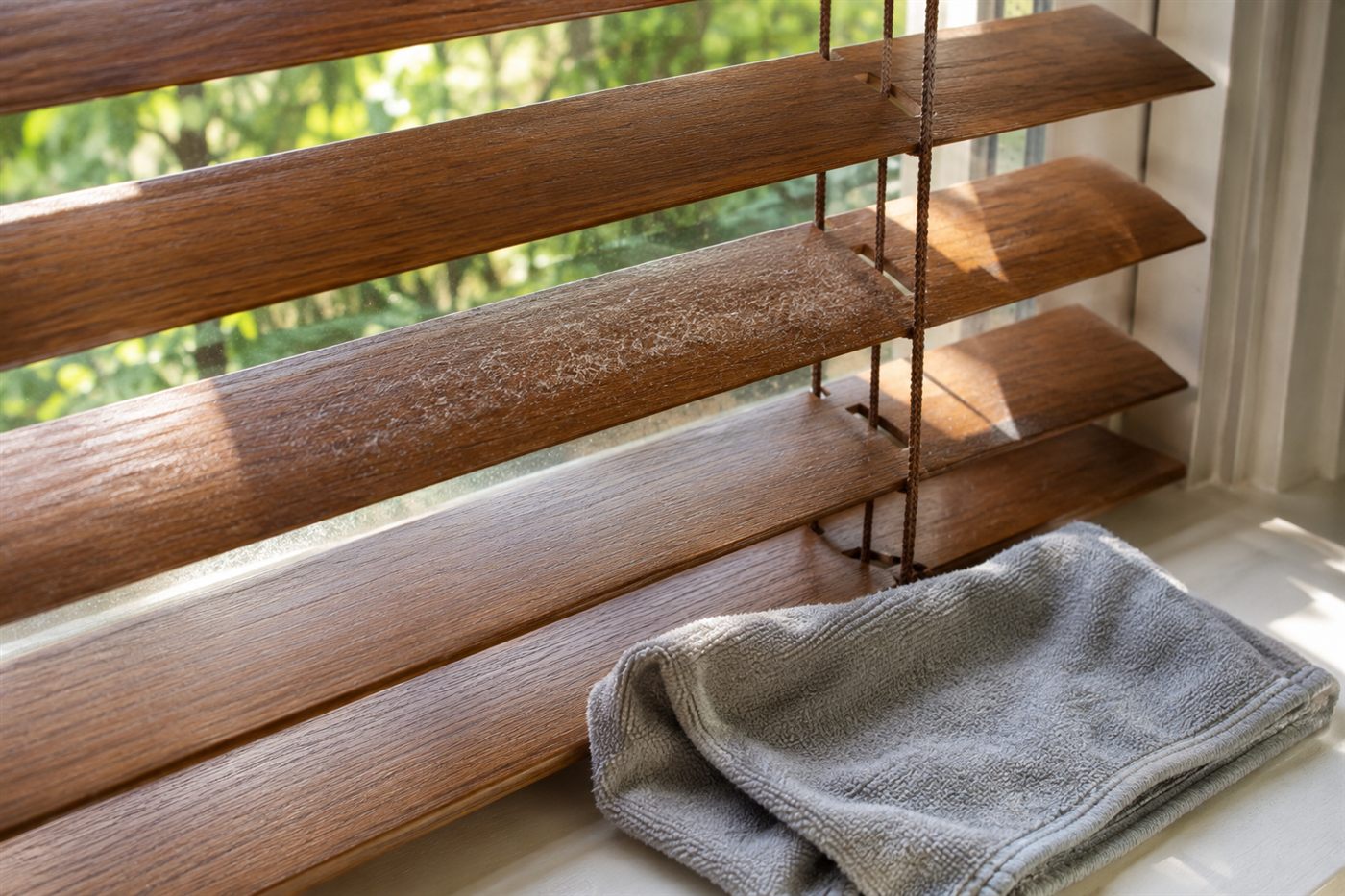
Decide whether a mark needs more than dusting
Look at the affected area in daylight. A loose dust line, a greasy kitchen deposit and a damaged coating require different decisions. Do not treat a scratch as a stain to be scrubbed away. Check the care guide for the exact slat material before introducing moisture. Where it calls for a discreet test, choose an inconspicuous spot and let it dry before judging the finish.
For a blind whose instructions allow a lightly damp cloth, apply only the permitted method and keep the cloth controlled. Avoid leaving droplets in the headrail or around moving parts. Luxaflex warns against excess moisture, harsh products and steam on its Venetian blinds. Do not spray a general cleaner across the window: it may land on glass, cords, timber or nearby fabrics with different care requirements.
Keep timber and aluminium care separate
On a real wood blind, dry dusting is the safer routine unless the maker specifies otherwise. A damp wipe that seems harmless on a painted wall may affect the slat finish or shape. Do not immerse the blind, use a steam cleaner or try to wash it in a bath. If a persistent mark remains, ask the supplier what the coating will tolerate.
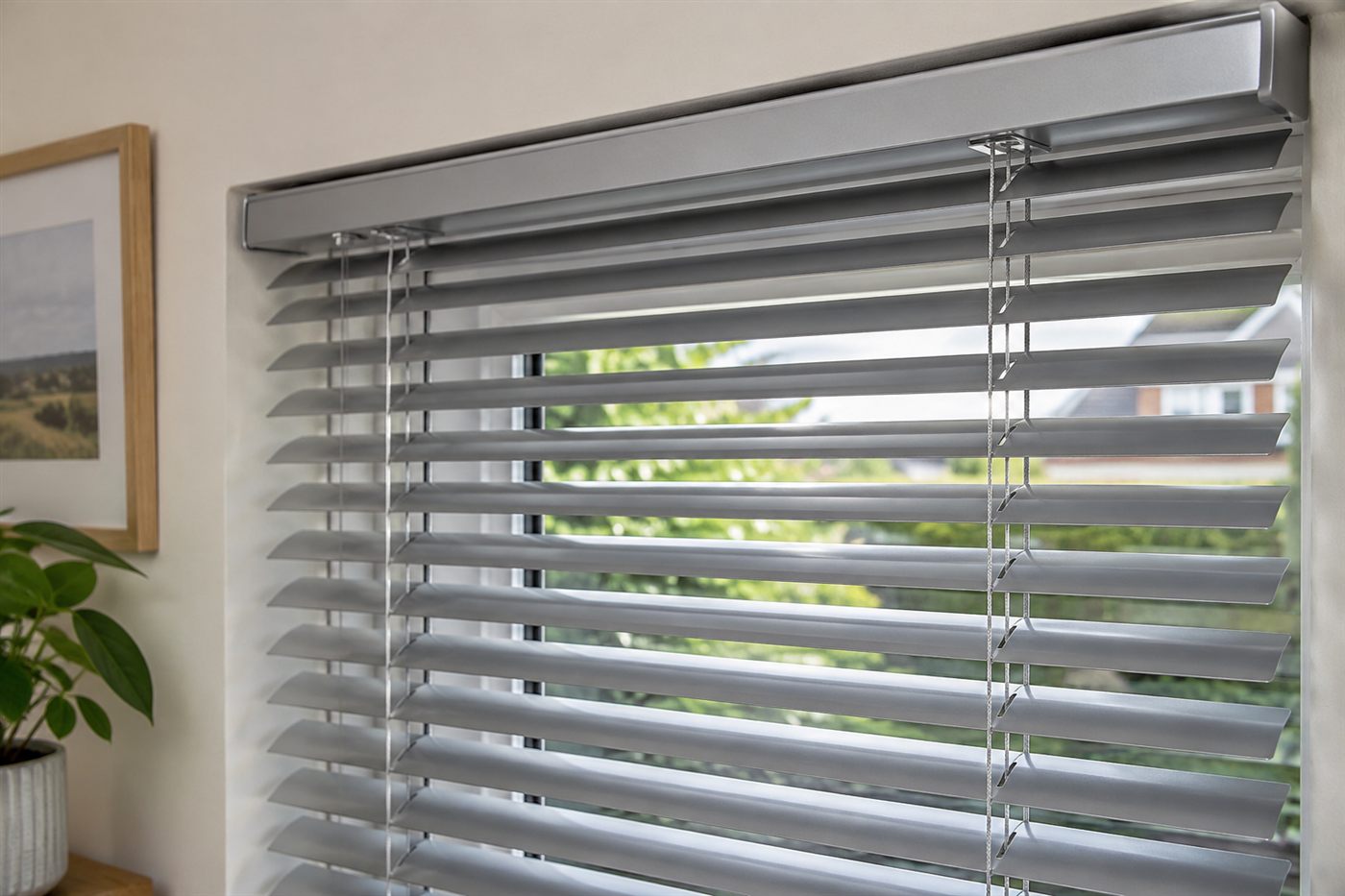
Suitable aluminium slats may allow damp cleaning under the maker’s instructions. Support them while wiping along their length rather than pressing down across the edge. Dry them as required, paying attention to the steel headrail where trapped moisture may matter. The finish can still be scratched by abrasive sponges or grit in a cloth, so clean tools remain important even on metal.
Respect cords, tapes and controls
Do not pull cords to bring a stubborn area closer or use them to hold the blind at an unusual angle. Avoid soaking fabric tapes or drawing liquid into a motorised unit. Clean only the accessible parts covered by the product guidance. If dust has collected inside the headrail, do not dismantle it on the assumption that it is a simple cover. Ask for service advice when access requires taking the mechanism apart.
Keep cord safety devices in place and follow the installation instructions. An untidy cord is not a reason to remove a tensioning device. When you finish, return controls to their normal position and check operation gently. If the blind catches, stop rather than trying to free it with repeated force.
Finish the surrounding area in the right order
Dust may have settled on the sill, frame and floor. Clean those surfaces using their own care instructions, with a fresh cloth rather than the one used on slats. If you also plan to clean the glass, keep window product off the blind. VELUX advises applying window cleaner to a cloth instead of spraying towards blinds, because splashes can affect the fabric. That is a useful boundary even when your blind is from another maker.
Let any permitted damp area dry fully before raising or stacking the blind. Check the slats from both directions and leave a small mark alone if further treatment exceeds the instructions. A practical result is a blind that operates properly and looks cared for, not one polished at the cost of its finish.
When to ask for help
Heavy grease, fragile cords, inaccessible height or uncertain materials deserve a specific discussion. When asking about blinds cleaning in Guildford, provide the type, approximate size, material and photographs of the whole installation and any affected area. If the nearby panes need attention, describe them separately under window cleaning. For curtains next to the blind, check curtain cleaning rather than applying the slat method to fabric.
Keep the maker’s care sheet accessible for the next light dusting. A gentle pass is easier to repeat than a delayed attempt to remove heavy build-up with stronger methods. If damage appears, stop and contact the supplier or an appropriate repairer. Cleaning should preserve the blind’s movement, finish and safe installation while making the room easier to look after.