
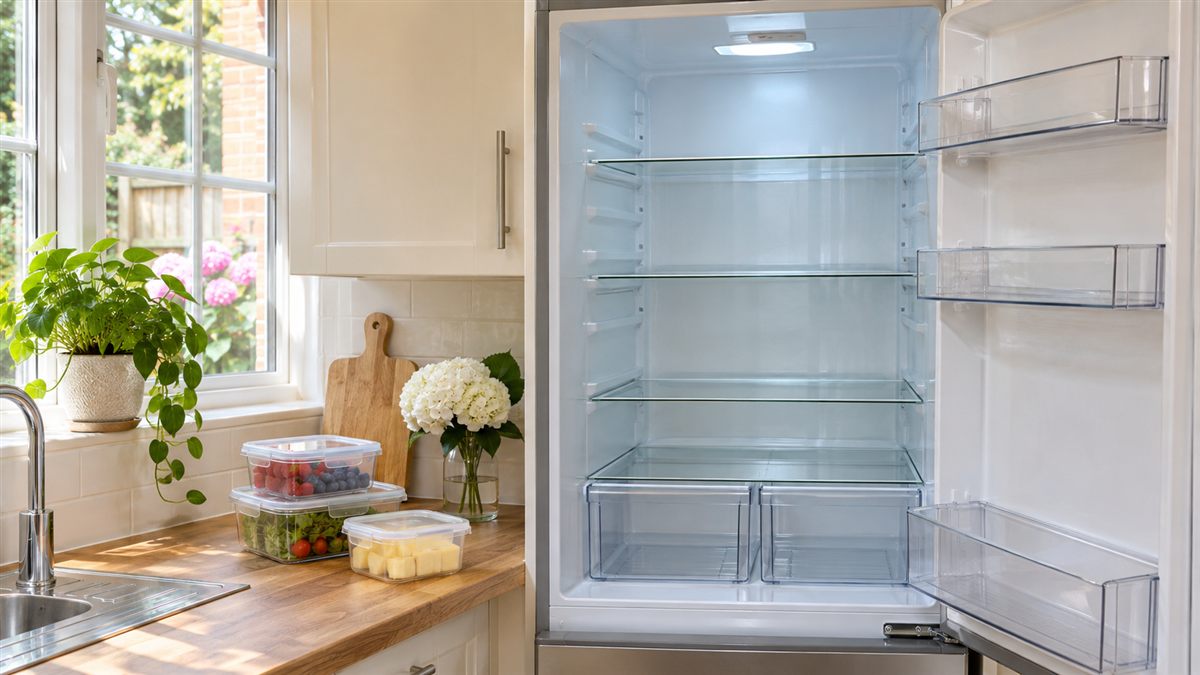
A fridge clean is easier when you treat it as a small food storage project rather than a quick wipe around jars. Food needs somewhere suitably cold to wait, removable fittings need careful handling, and the door seal should not receive whatever cleaner is left on your cloth. Before you start, find the instructions for your model. They settle questions that appearances cannot, including which shelves can be removed and whether a drawer can go in a dishwasher.
Choose a quiet point in the week
Pick a time when the fridge contains relatively little food. Make space in another fridge or a suitable cool container before opening the door for a prolonged clean. Keep chilled food covered and follow its storage instructions. The Food Standards Agency advises moving food to another fridge or a safe cold area for a thorough clean, because leaving it at room temperature can allow bacteria to grow. A large shopping delivery is a poor moment to begin.
Have clean soft cloths, a towel for removed parts and the appliance manual ready. Check the maker’s instructions for switching off, cleaning products and returning the appliance to use. Do not unplug an integrated unit or pull it away from cabinetry merely to reach an edge. If you cannot identify the model, limit yourself to accessible routine care until you have reliable guidance.
Empty one area with a clear plan
Move food into its prepared cold storage rather than spreading it across the kitchen worktop. Keep raw items contained and separate from ready to eat food. Decide what to discard yourself; a cleaner should not have to judge whether a container is wanted or safe. Note any leaking package so its residue does not transfer to clean shelves.
Remove loose crumbs and visible spills with a suitable cloth before applying a cleaner. Work from the top towards the lower compartments, using fresh cloth faces when they become dirty. Keep liquid away from lights, controls and openings. An interior that looks simple may hide electrical fittings or a drain, so do not spray freely into corners.
Handle shelves and drawers without force
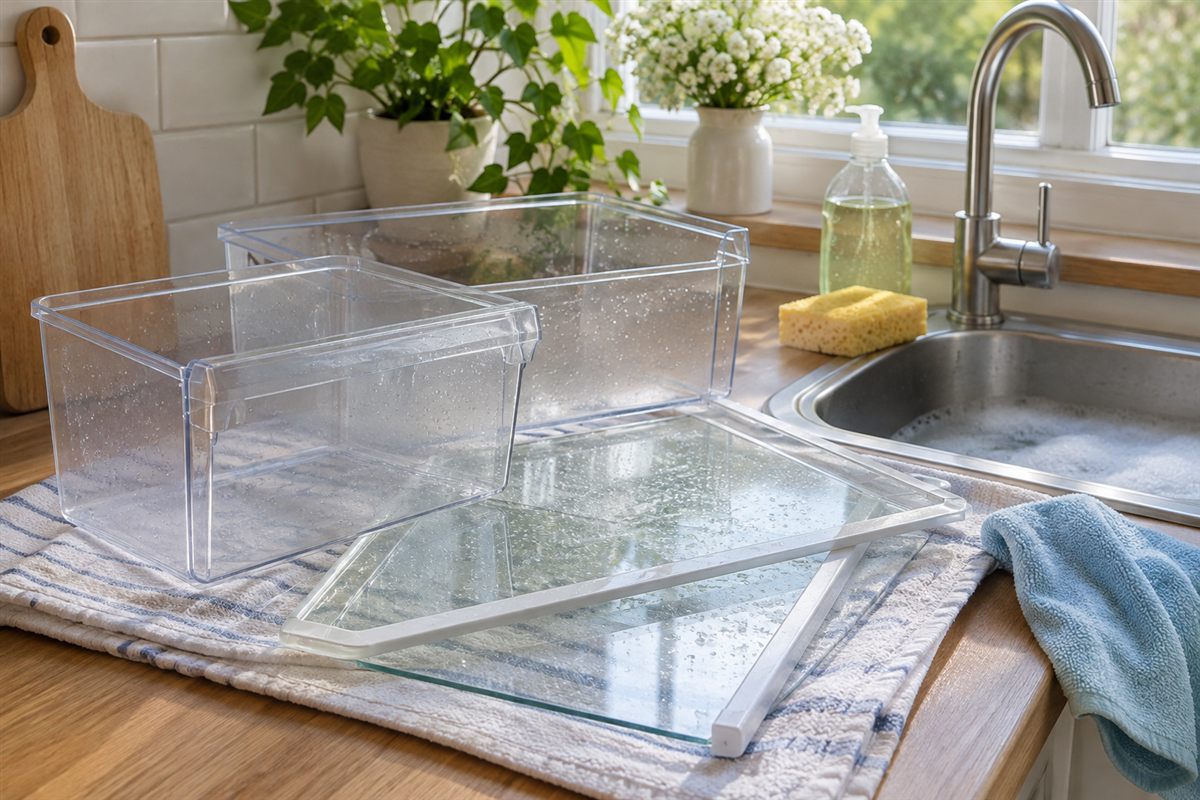
Check the removal sequence in the manual. Some glass shelves lift from a frame; others have stops or fittings that need a particular movement. Support each piece with both hands and put it on a towel where it cannot slide. Do not lever a reluctant shelf with a tool. A cracked shelf or loose runner is a repair question, not a reason to press harder during cleaning.
Wash removable parts only by a method allowed for your model. Bosch’s fridge guidance, for example, recommends soft materials and warns that shelves and containers may deform in a dishwasher. That is useful caution, but the instructions for your own fridge decide what is permitted. Let parts dry as directed before refitting them. Avoid placing a very cold glass component directly into hot water if its instructions do not allow that change.
Match the cleaner to the interior
Use a product and dilution approved by the manufacturer, then follow the product label for application and removal. A soft cloth is usually easier to control than a saturated sponge. Do not mix cleaners, use an abrasive pad or assume that a stronger chemical will solve an old stain. Bosch advises against abrasive, acidic, chloride based cleaners and solvents for its appliances. Different makers may specify different routine products, which is another reason to check the manual.
Clean the walls, shelf supports and accessible door compartments in small sections. Change the cloth when it starts moving residue around. Remove cleaner as instructed, then dry the surfaces where the guidance requires it. If discolouration remains after a permitted method, stop and assess it. Repeated scrubbing can alter plastic while leaving the underlying mark untouched.
Give the door seal its own treatment
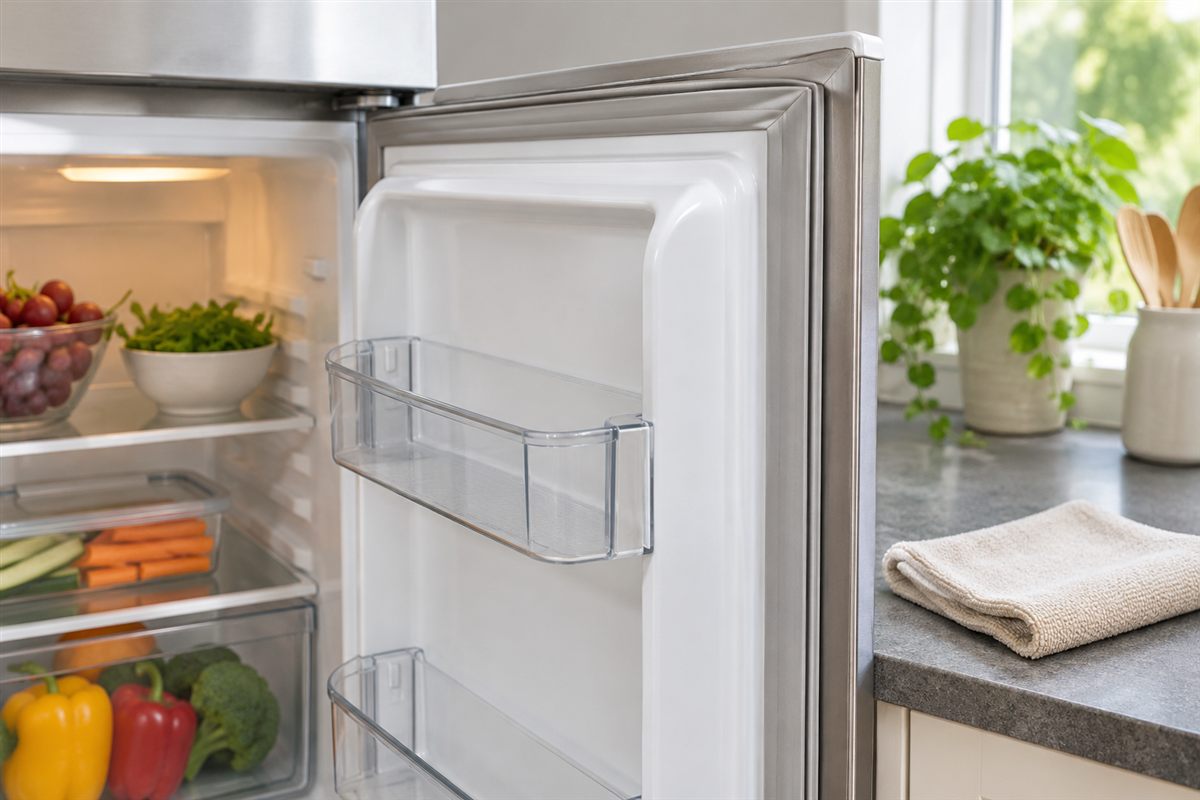
The flexible seal collects crumbs along its folds, but it can also be damaged by aggressive handling. Follow the exact appliance guidance rather than dragging a brush through it. Bosch recommends clear water for its door seals and thorough drying. Use a soft, lightly damp cloth where your model permits, then dry the accessible folds gently. Keep cleaner intended for shelves off the seal unless the maker specifically approves it.
Look for tears, a section pulling away or a door that no longer closes properly. Cleaning will not mend those faults. Record the model and ask the manufacturer or an appropriate repair service for advice. Do not prise off the seal or adjust the hinges as part of an ordinary clean.
Check drains and awkward details cautiously
Some fridges have a drainage opening at the rear, while others have a different design. Locate it in the manual before touching it. Beko describes a supplied plunger for certain models; that does not mean a sharp implement or the same procedure suits yours. If water is pooling or a smell persists, note where it appears and follow model specific troubleshooting. Avoid forcing debris deeper into an opening.
Clean accessible handles and outer surfaces with a method suited to their finish. Stainless steel, black finishes, painted panels and printed controls may have different restrictions. Apply product to a cloth when instructed, keeping liquid out of buttons and joins. Do not treat a damaged control label as grime to be rubbed away.
Reassemble and return food safely
Check that the interior and removed parts are dry and correctly seated. Switch the appliance back on as the manual directs, and follow its instructions for when food can return. Put chilled items back promptly once the fridge is ready. Arrange raw foods in covered containers so they cannot drip onto ready to eat items, following the Food Standards Agency’s home food safety advice. Do not pack shelves so tightly that the door cannot close or the manufacturer’s airflow guidance is ignored.
Check the door closes without an obstruction. Wipe up any new drips from containers before replacing them. Keep a note of a recurring leak, persistent odour or temperature concern; these may need appliance attention rather than another cleaning product.
Make the next clean easier
Deal with a fresh spill using the permitted method rather than waiting for it to harden. When you put shopping away, check whether a container is leaking and whether an older item needs a decision. A brief shelf check can prevent a large clearing session later. Keep the manual or model number accessible for everyone who uses the appliance.
If you need help with several appliances, describe the fridge model, accessible parts and any separate freezer work when asking about appliance cleaning in Guildford. A broader kitchen visit can be discussed through deep cleaning; agree fridge interiors explicitly. For surrounding surfaces, see domestic cleaning. Tell the team about damaged fittings or products already used. A useful plan protects the fridge and keeps food storage practical, even when an old mark cannot be removed.