
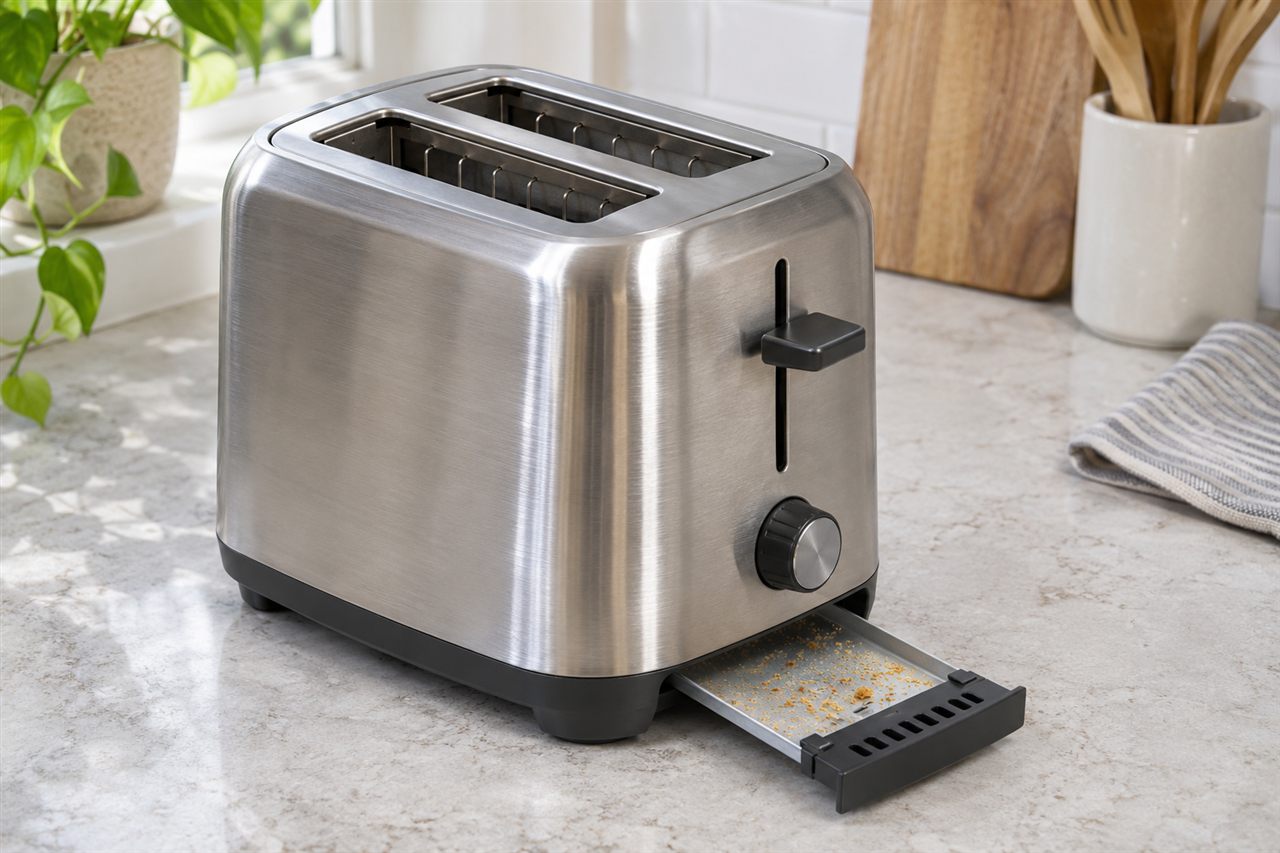
Toast crumbs have a way of gathering where they are least visible: in the tray beneath the slots and around the base of the appliance. Cleaning them is a small job, but a toaster is still an electrical appliance with heating elements close to the food path. The safe approach begins with its own instructions, a disconnected plug and a fully cooled body. This guide covers accessible crumbs and exterior surfaces, not dismantling, repairing or washing the interior.
Find the tray and the manual
Identify the toaster model and locate its care section. The crumb tray may slide from the rear, front or side, and some designs have a different arrangement. Check how the tray releases before pulling on a panel. If you cannot find a removable tray, do not pry open the base to create one. A photograph of the model label can help you find the correct online instructions.
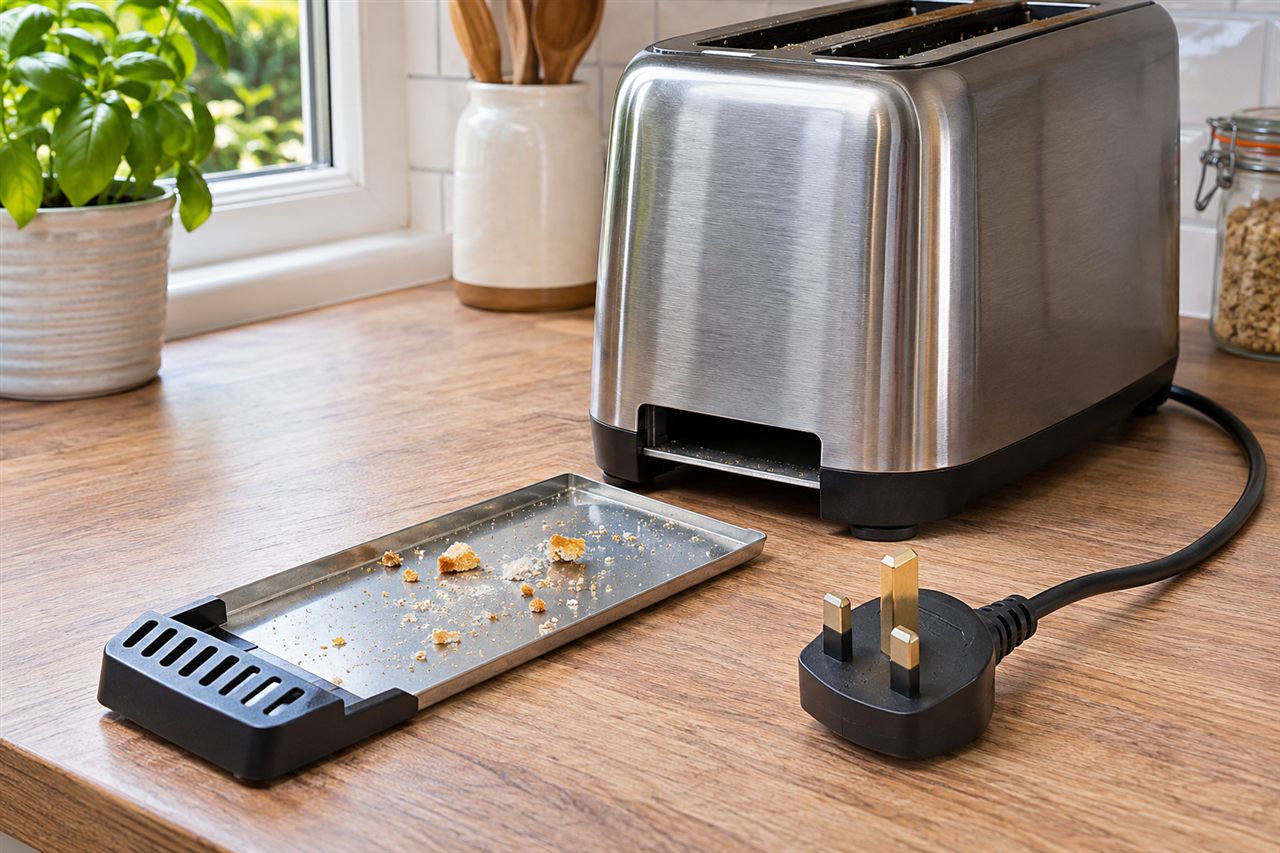
Dualit’s toaster safety advice says to switch off, unplug and let a recently used toaster cool before cleaning. That principle applies here, while the exact handling of your appliance must follow its maker. Do not rely on the browning dial being at zero as proof the toaster is disconnected. Keep the plug visible and away from moisture while you work.
Make a clear, dry workspace
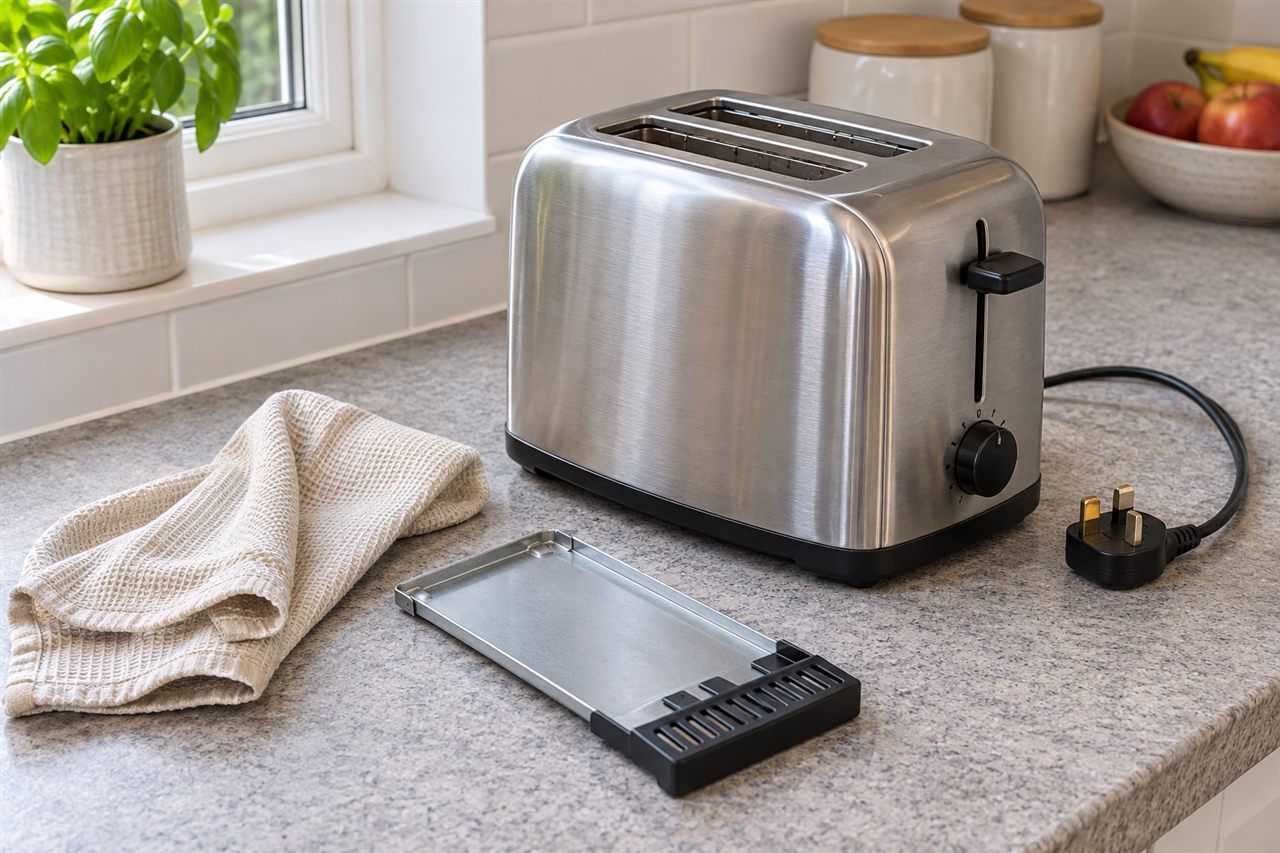
Move the toaster to a stable worktop away from the sink, using its normal handling points. Clear food, crockery and loose papers from the area. Put a dry towel or sheet of paper beneath the tray position to catch falling crumbs, but keep it away from the appliance before the next use. Do not work over a bowl of water or place the toaster where liquid can splash into a slot.
Check the lead and plug as you move it. If either looks damaged, stop and seek suitable electrical advice rather than continuing to use the appliance after a cosmetic clean. A cracked casing, loose control or unusual burning smell needs a different response too. Cleaning cannot prove that an electrical fault has been fixed.
Empty the tray without tipping crumbs back in
Slide out the tray as the manual directs and keep it level until it is over a bin. Tip the loose crumbs away gently. Do not shake the tray across the worktop, where crumbs can scatter into other appliances or food. If a stuck piece remains, use only the tool and method allowed for the tray material. Avoid bending a thin metal edge to make it look perfectly clean.
Some trays can be wiped with a soft cloth; others have specific restrictions. Read the instructions before adding moisture or detergent. Dry the tray fully if a permitted method leaves it damp. A wet tray should not be returned to an electrical appliance simply because the crumbs have gone. Check the guide for its correct orientation before sliding it back.
Keep tools out of the slots
A slice of bread can leave a larger fragment above the tray. Do not insert a knife, fork or other metal object into the slots to reach it. Dualit warns against putting objects into a toaster because doing so can damage it and create an electric shock risk if it is powered. The fact that you have unplugged it does not make rough probing a suitable cleaning method.
If the maker permits a soft brush for accessible loose crumbs, follow its instructions with the appliance disconnected and cool. Do not spray cleaner, pour water or add powder into the slot. Heating elements and internal fittings are not a surface for ordinary household washing. If food is wedged beyond the specified user cleaning steps, ask the manufacturer for advice rather than dismantling the toaster.
Handle any permitted tipping carefully
Some manuals describe gently tipping or inverting a cooled toaster over a bin after the tray is removed. Check whether yours permits this. Support it securely, keep the lead under control and avoid striking the body against the worktop. Do not shake a heavy four-slot model vigorously or press against the heating elements. If it is awkward to hold, leave that step out.
Watch for feet, loose controls and a tray that might fall. A gentle movement may release crumbs, but it should not sound like internal parts are rattling. If something seems detached, stop and seek product advice. The aim is to remove accessible debris, not to chase every microscopic crumb by force.
Clean the exterior by finish
Look up the care rules for painted, polished metal or coated surfaces. Use a soft cloth and the specified product, applying it to the cloth if instructed. Keep moisture out of switches, controls, vents and slots. Do not use an abrasive pad to remove a mark from a shiny side panel; scratches can remain after the residue is gone.
Wipe the surrounding worktop separately with a cleaner suitable for that worktop. A product safe for laminate may not suit timber or natural stone. Finish by drying any permitted damp area and checking that no cloth, paper or cleaning product has been left close to the toaster’s hot surfaces.
Refit and check before the next use
Return the dry tray exactly as the manual shows. It should sit fully in its channel without force. If it will not close, remove it and check for an obstruction rather than pushing harder. Put the toaster back on a stable, suitable surface with the ventilation space the maker requires. Do not operate it beneath loose curtains or with items stored on top.
Keep the next use attended. If the appliance smokes unexpectedly, trips a circuit, smells electrical or fails to work normally, disconnect it when safe and obtain suitable advice. Do not keep toasting to test whether a clean has cured a fault. A crumb tray check is maintenance, not an electrical safety test.
Keep a note of foods that crumble or stick in the slots. If the toaster manual gives limits for slice size or foods, follow them rather than using a tool to push food down. Cleaning works best when the appliance is used within its design, not when crumbs are forced deeper.
Make crumb checks part of kitchen care
Check the tray under the maker’s recommended routine and more often if the toaster sees heavy use. A quick look after several breakfasts is easier than tackling a large build-up. Keep the manual or model number accessible so another household member can empty it correctly. Do not let children handle a recently used appliance just because the task sounds small.
If several kitchen machines need attention, describe them separately when asking about appliance cleaning in Guildford. A general domestic cleaning visit can cover surrounding worktops by agreement, but do not assume electrical servicing or internal toaster dismantling is included. The useful result is a dry, correctly assembled appliance with accessible crumbs removed and any genuine fault left for the right specialist.