
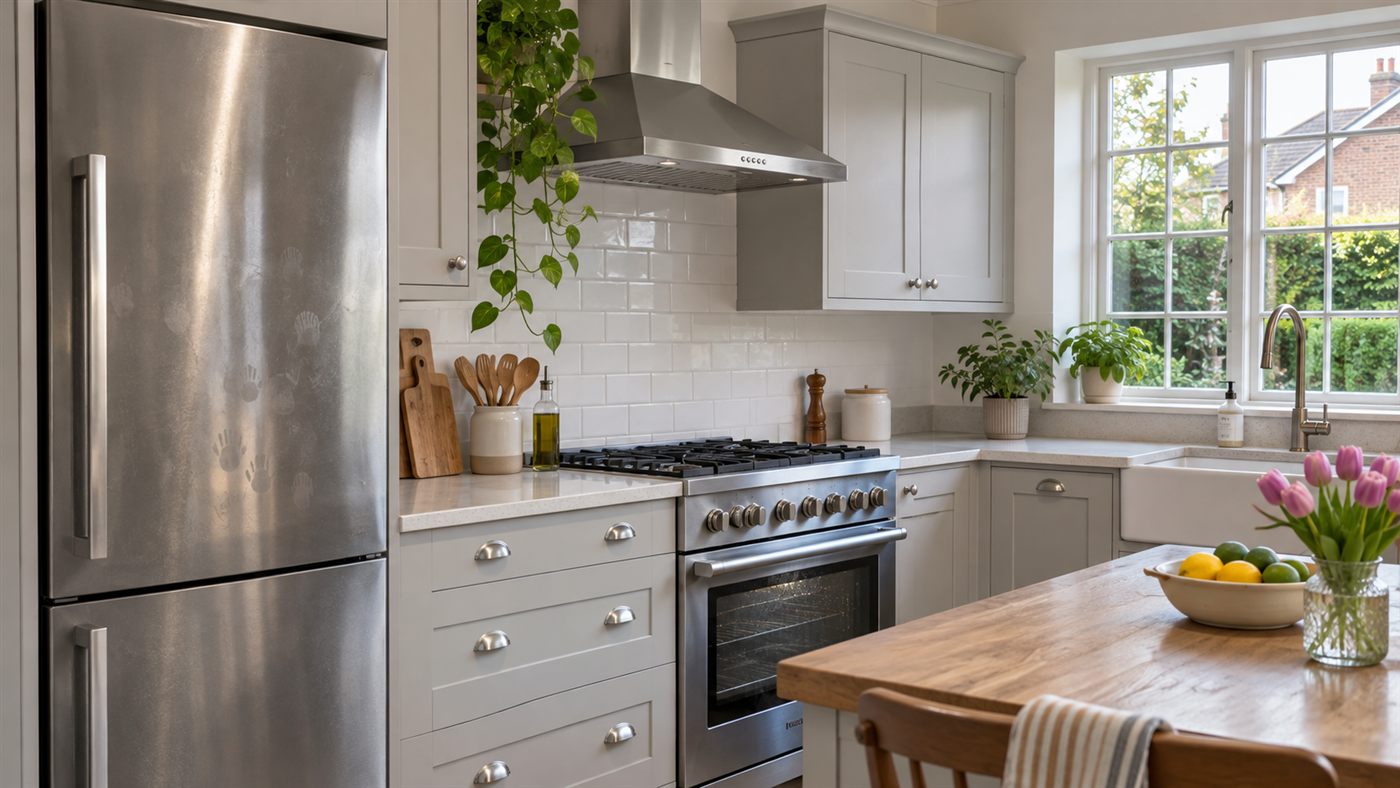
Fingerprints on a stainless steel fridge or cooker hood can invite endless polishing. Often the real problem is a cloth moving residue around, a product left on the surface or a finish that needs a different method. Before wiping, check the appliance model and identify whether the panel is plain brushed steel, an anti-fingerprint coating, black stainless steel or another treatment. Similar colours do not guarantee the same care instructions.
Identify the panel and its finish
Find the maker’s manual and cleaning section. A single appliance can combine brushed metal, coated handles, plastic trim and printed controls. Note which parts are actually stainless and whether the maker approves a conditioner. NEFF warns that one of its stainless care sets is unsuitable for anti-fingerprint or foil coatings. A product sold for steel should therefore not be spread across an entire appliance without checking.
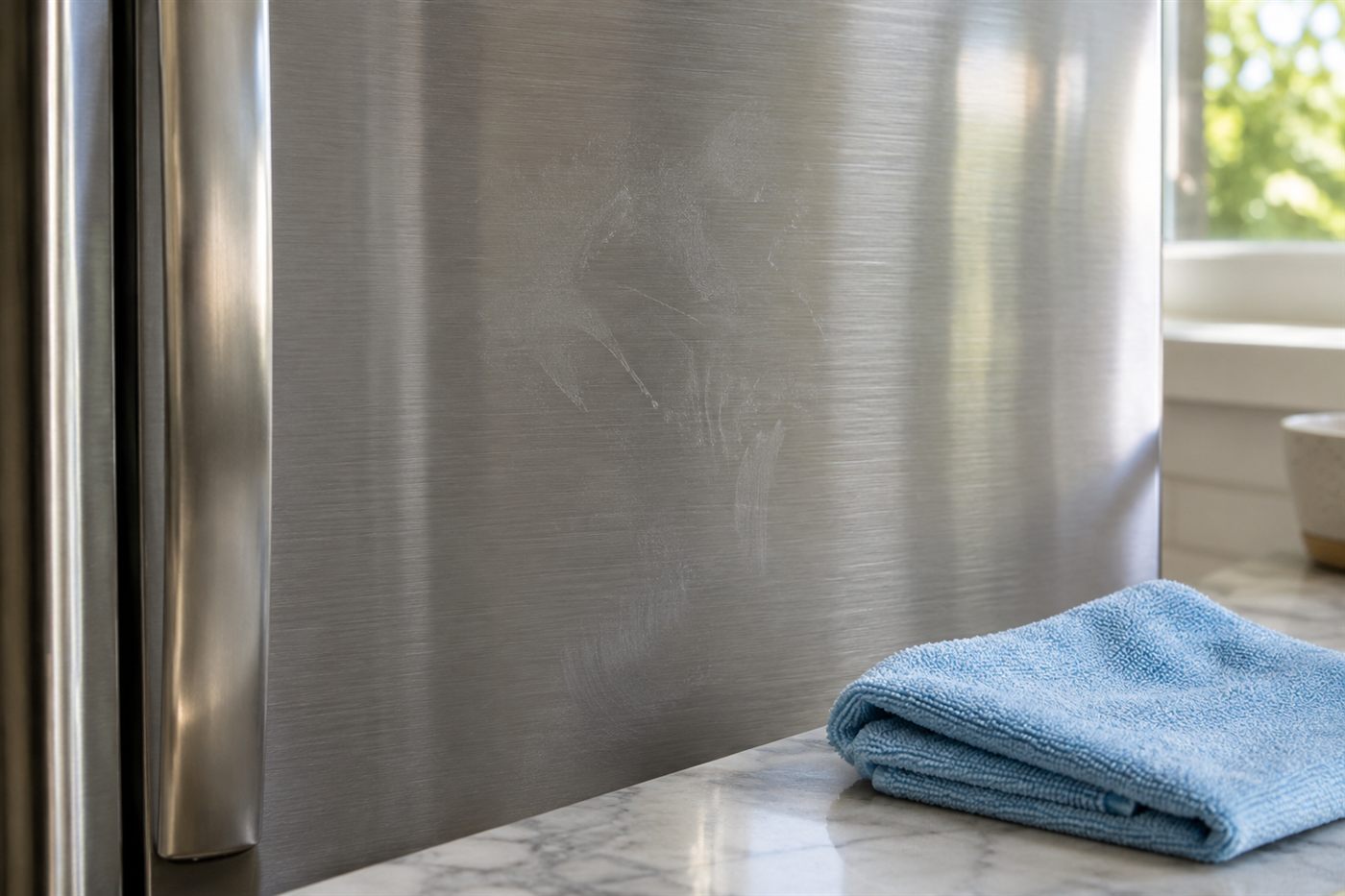
Look at the direction of any visible grain. It may run vertically on a fridge door and horizontally on a handle. Bosch advises wiping its suitable stainless surfaces in the direction of the grain. If the panel has no obvious grain or carries a coating, follow the model guidance rather than searching for one with a rough cloth.
Start with loose dirt
Remove dust and loose grit with a clean soft cloth before using moisture. Grit trapped in a cloth can leave fine scratches as it moves across a shiny panel. Keep the cloth used on a greasy hob separate from the one used for a fridge door. If a mark contains dried food, do not scrape it with a blade or metal utensil.
Check whether the appliance should be switched off or cooled before its exterior is cleaned. A cooker hood or oven door may still be hot after use. Keep children and pets away from an open work area. Move nearby food and small objects so you have room to work without spraying into vents, switches or a plug socket.
Use a compatible routine cleaner
For its ordinary stainless fridge finish, Bosch describes a soft cloth with mild soapy water, followed by drying along the grain. Other makers may specify a product or restrict water around joins. Apply the permitted cleaner in a controlled way, often to a cloth rather than directly onto a panel. More liquid will not necessarily remove more fingerprints.
Work in small sections. Lift greasy marks gently and turn the cloth to a clean face rather than redistributing them. Remove cleaner as the label and appliance guidance direct. Dry with a fresh soft cloth, paying attention to the edges where water can gather. Check the surface in normal light only after it has dried; a damp streak may look worse temporarily.
Protect logos and controls
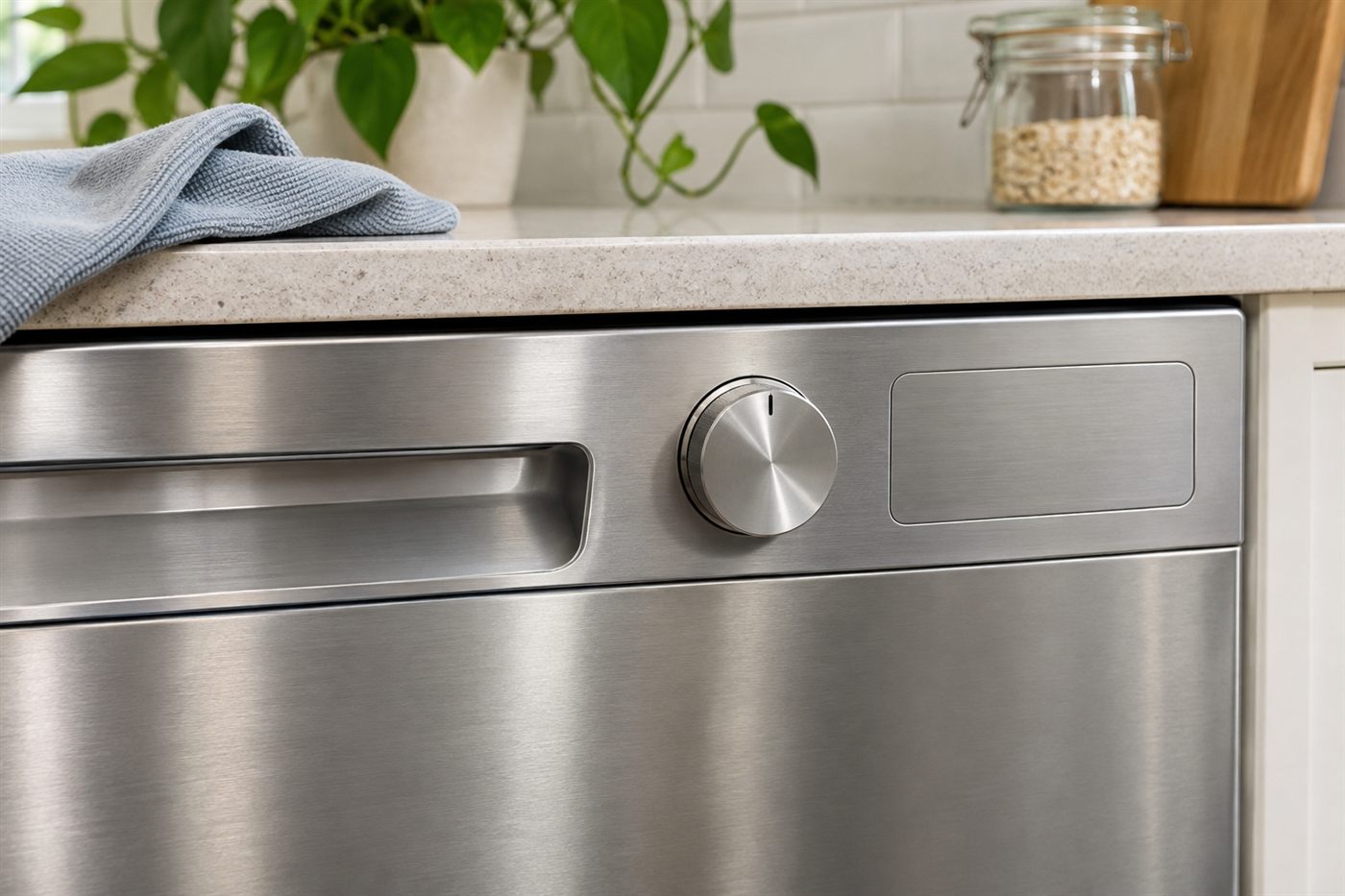
Printed markings, screens and touch controls are not ordinary metal. Bosch specifically warns against putting its stainless conditioner on logos, control labels or black stainless steel. Use the maker’s separate instructions for those parts. Do not polish away a printed symbol in pursuit of one continuous shine across the door.
Keep cleaner from running into buttons, display edges, seams and electrical openings. A cloth should be lightly controlled, not dripping. Do not remove a control knob or trim unless the manual gives a user cleaning procedure. A loose or damaged control needs appliance service, not a stronger cleaner.
Decide whether conditioning is appropriate
A conditioner may be useful for a suitable brushed stainless surface when the maker recommends it. It is not a mandatory final step for every appliance. Check compatibility and apply only the specified amount and method. Bosch’s guidance uses its conditioner along the grain for suitable panels; NEFF’s product listing excludes anti-fingerprint and foil coatings from its own care set.
If you do not know the finish, stop after approved routine cleaning and seek the manual rather than experimenting with polish. An oily film can attract further marks or become difficult to remove from a treated surface. Do not combine conditioner with another cleaner or apply it over dirt that has not been removed.
Separate smears from damage
A smear often changes when a clean cloth removes product residue. A scratch stays in the same place and may catch the light from a particular angle. Pitting, rust-coloured marks or a lifting coating need a different assessment. Do not assume that a stain remover, acid or abrasive cream will repair a finish. Photograph the area and note what has already been used.
If repeated wiping creates new streaks, stop and clean or replace the cloth. Check the cleaner’s removal instructions and whether too much product was applied. Work on one small panel to confirm the method before moving across a large fridge door. A discreet compatibility test may be required where the maker says so, but it cannot override an explicit restriction.
Care for different appliances separately
A fridge door, extractor hood and oven fascia may come from different manufacturers even when they look coordinated. Keep their manuals separate. A cleaner for a cool door might be unsuitable near a hot oven or food contact area. Black stainless and fingerprint resistant finishes can need particularly different care from bare brushed metal. Do not transfer a method on appearance alone.
Before a larger clean, make a quick surface map for the kitchen. Write down which appliance has brushed steel, which has a coated door and where printed controls begin. Keep it with the manuals rather than sticking it to a visible door. This sounds fussy until a replacement cleaner is asked to work across several similar panels. The map can prevent a steel conditioner being applied to a fingerprint resistant finish or a damp cloth being drawn across a display. It also makes a quotation clearer: list the appliance exteriors requested and identify interiors as separate work, rather than assuming every door and cavity is included.
Clean the worktop and splashback under their own material guidance as well. Product carried from a metal panel to stone, timber or painted cabinetry may leave a mark. Change cloths at the boundary. A kitchen with several finishes is easier to maintain when each product has a named surface rather than one bottle labelled “everything”.
Keep the result manageable
Wipe fresh fingerprints with the approved routine rather than repeatedly layering polish. Store a suitable clean cloth where it will not pick up grit from the sink area. Keep a note of the appliance model, finish and approved product for anyone else who cleans the kitchen. If the panel changes appearance, stop and ask the manufacturer before trying a new chemical.
For several machines, discuss the models and finishes when asking about appliance cleaning in Guildford. A domestic cleaning visit can include accessible exteriors by agreement, using the care information you provide. Cleaning can lift appropriate dirt and residue, while scratches or failing coatings need separate advice. The most reliable finish comes from using the method intended for the actual panel.