
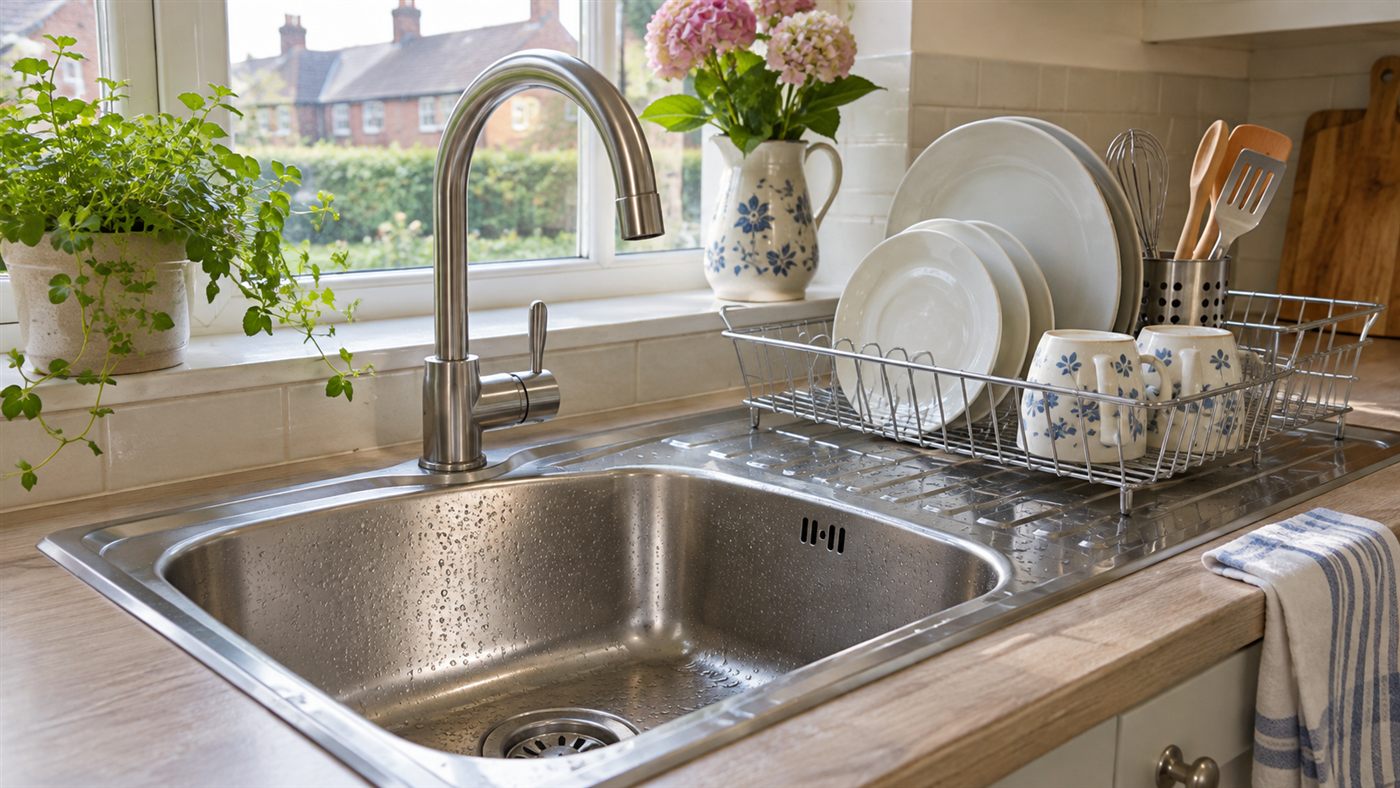
A kitchen sink sees food, pans and cleaning products, so a mark can look like dirt even when it is mineral residue, a scratch or damage to the finish. Stainless steel, ceramic and composite sinks do not share one universal cleaner. The safest routine starts with the sink maker’s instructions and keeps the tap, drain fitting and surrounding worktop on their own care plans. This guide covers accessible everyday cleaning rather than dismantling plumbing or repairing a damaged basin.
Identify the sink material
Look for the purchase record, model label or installer paperwork. A dark composite bowl may be a particular resin and mineral product, while a white sink may be ceramic or a coated material. Do not choose a cleaner from colour alone. Check whether the manufacturer distinguishes the bowl from the tap, waste fitting and overflow cover.
Franke provides separate care instructions for its stainless steel, ceramic and Fragranite or Tectonite sinks. BLANCO also gives specific advice for its Silgranit material. These are useful examples of material differences, not a single procedure for every sink in Guildford. If the brand is unknown, keep to gentle accessible care and ask the supplier before treating a stubborn mark.
Clear the bowl before wet cleaning
Remove dishes, food scraps and a loose washing-up bowl. Keep knives and broken items from being hidden beneath suds. Empty an accessible strainer under its instructions, but do not dismantle a waste assembly to chase an odour. Put food debris in the appropriate household waste, then use a clean soft cloth for the sink surface.
Wipe away loose grit before rubbing the finish. A pan base or wire scourer can leave marks even on robust steel. Check the area around the tap and worktop joint for standing water. If a seal is loose or water appears beneath the cabinet, treat that as a plumbing or fitting question rather than adding more cleaner.
Care for stainless steel without chasing a mirror shine
For its stainless sinks, Franke describes routine care with a soft cloth or sponge, soapy water, a rinse and thorough drying. It warns against wire wool, scourers and bleach on that finish. Follow the instructions for your actual sink. A mild, permitted method can remove ordinary food residue without adding scratches in an attempt to polish away every sign of use.
Look for the direction of a brushed finish and follow maker advice where relevant. Rinse away product rather than leaving it to dry in the bowl. Remove wet cloths and containers after use; Franke notes that water-borne deposits can leave discoloured patches. A small scratch may be wear, not a stain that a stronger chemical can remove.
Treat ceramic as a separate surface
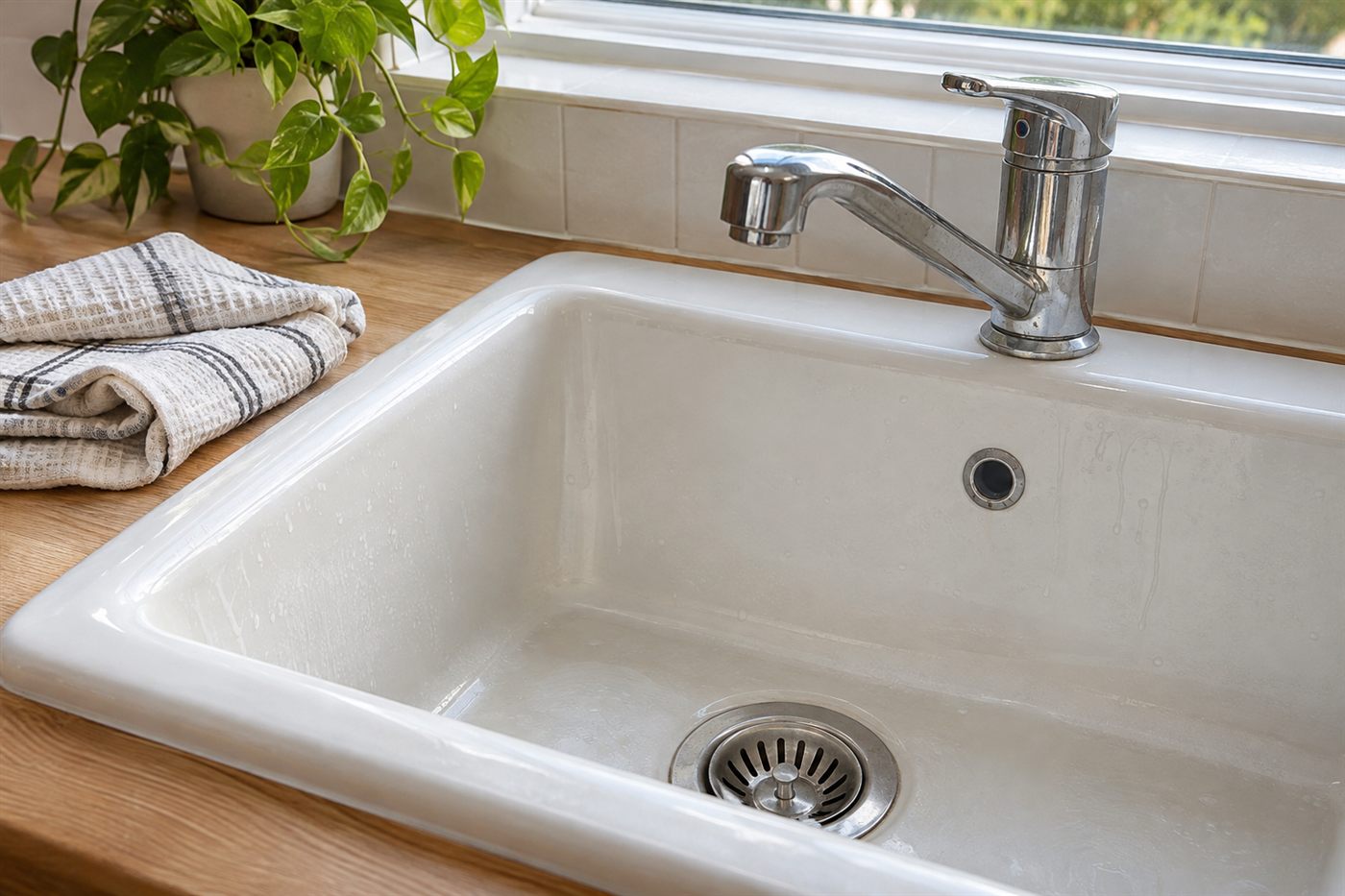
Find the care sheet for the ceramic glaze and any coloured finish. Use only its approved product and tool. A hard pan may leave a metal transfer mark that looks different from a chip in the glaze. Do not use a metal scraper or abrasive pad to discover which it is. Photograph the mark if the permitted routine leaves it unchanged.
Take care at the junction with the worktop and around a fitted waste. A ceramic bowl can be sound while adjacent sealant has failed. Avoid soaking the joint to remove residue. If a crack, chip or loose fitting is visible, stop and ask for appropriate repair advice; cleaning cannot restore a damaged glaze or watertight seal.
Check composite sink restrictions
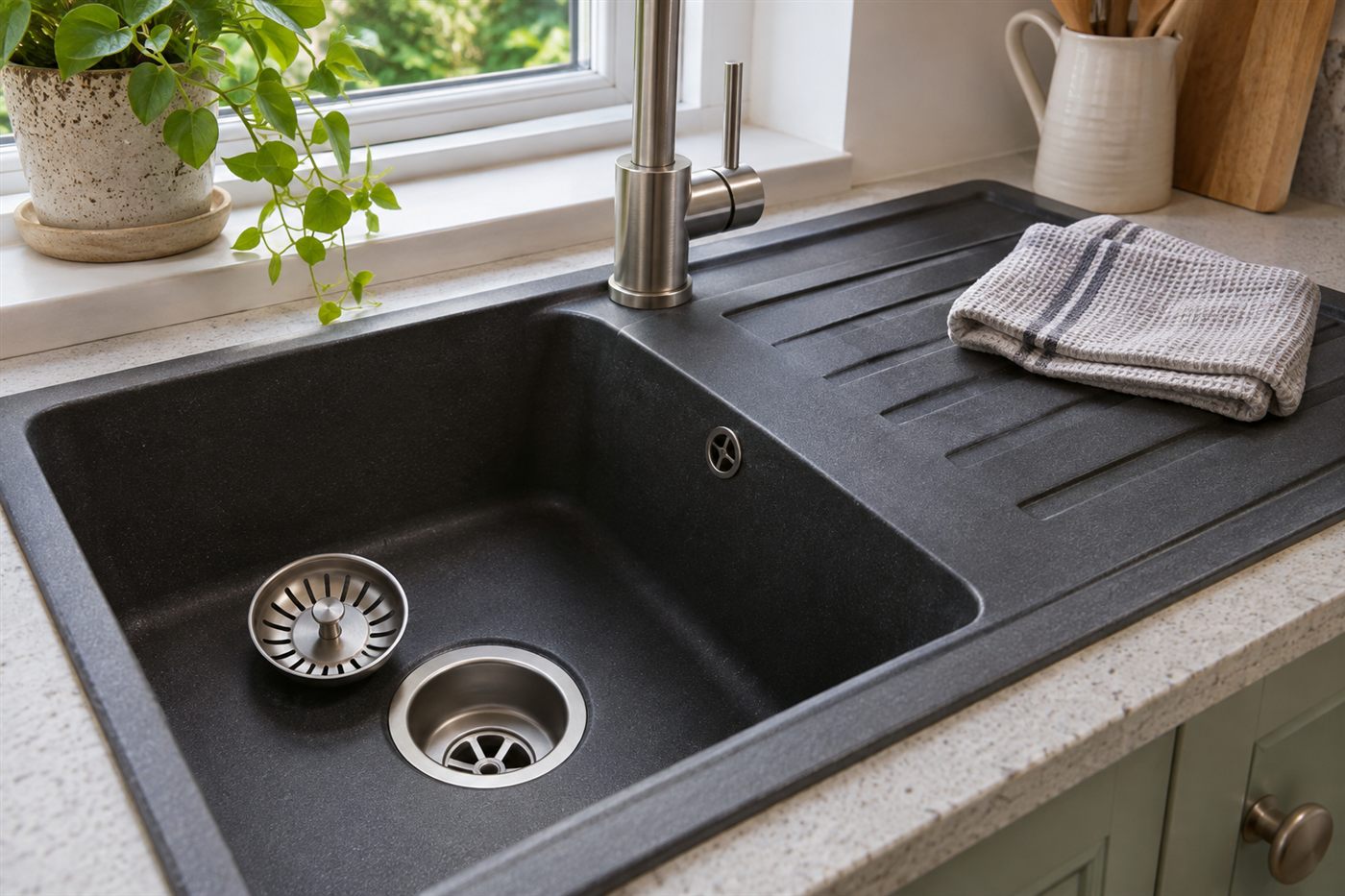
Composite products vary in formulation and finish. BLANCO’s Silgranit guidance identifies cleaners that should be avoided for its material, while Franke has its own Fragranite care route. Do not copy a product recommendation from a different composite brand. Check whether the manufacturer permits a cleaner for mineral deposits before applying it to the whole bowl.
Use a soft tool and controlled amount of product under the label, then rinse or remove it as directed. A dark sink may show pale water residue clearly; repeatedly adding strong cleaner can create another mark. A discreet compatibility test is sensible where the instructions call for one. Stop if the colour or texture changes.
Keep taps and fittings distinct
A plated tap can have different restrictions from the sink below it. Apply tap cleaner only where approved and prevent it from collecting on the bowl or worktop. Franke gives separate tap surface guidance for this reason. Keep water away from a pull-out hose connection or electronic control as the maker directs.
Clean accessible edges of the waste and overflow under the model instructions. Do not force off a cover because a video for another sink shows it coming away. A persistent smell may involve the trap or drainage, and a slow outlet may need plumbing attention. Surface wiping does not diagnose those problems.
A simple weekly check can reveal what ordinary wiping misses. Look at the base of the tap, the rim where the sink meets the worktop, and the visible seal around the waste. Dry them with the material-appropriate method and note any gap, movement or damp cabinet below. Do not pull at sealant to inspect it. An early description of a fitting concern helps the right person assess it without turning the cleaning visit into an improvised plumbing job.
Finish with a rinse and dry check
Remove the approved cleaner fully, following its label and the sink guidance. Change cloth faces when they become dirty. Dry the bowl and accessible fittings where the maker recommends it, particularly if water spots recur. Check the finish in ordinary light once it is dry. A wet surface can hide a scratch or make a harmless water film look like a permanent stain.
Keep the sink ready for normal use without leaving a chemical bottle, soaked cloth or abrasive tool in the bowl. If a mark remains, note whether it transfers to a cloth or stays fixed. That observation can help distinguish surface residue from damaged material. Do not layer another product over the first without checking compatibility.
If several people use the kitchen, label the approved sink product. Keep it separate from bathroom descaler and oven cleaner, and make sure everybody knows that taps and worktops may require different care.
Make a useful cleaning brief
If the kitchen needs broader attention, discuss the sink material and any restrictions when arranging domestic cleaning in Guildford. A deep cleaning visit can include agreed accessible details, but a leaking fitting or chipped basin still needs a separate repair. Share the model, photographs and products already used instead of asking for an unqualified stain-removal promise.
For routine care, keep the manufacturer’s guide and one suitable cloth close at hand. Clear food scraps, wipe ordinary residue and dry where required. Treat the tap, waste fitting and worktop as neighbouring materials with their own limits. A sink is easier to maintain when you know what finish you are cleaning and when a visible mark calls for a different kind of help.