
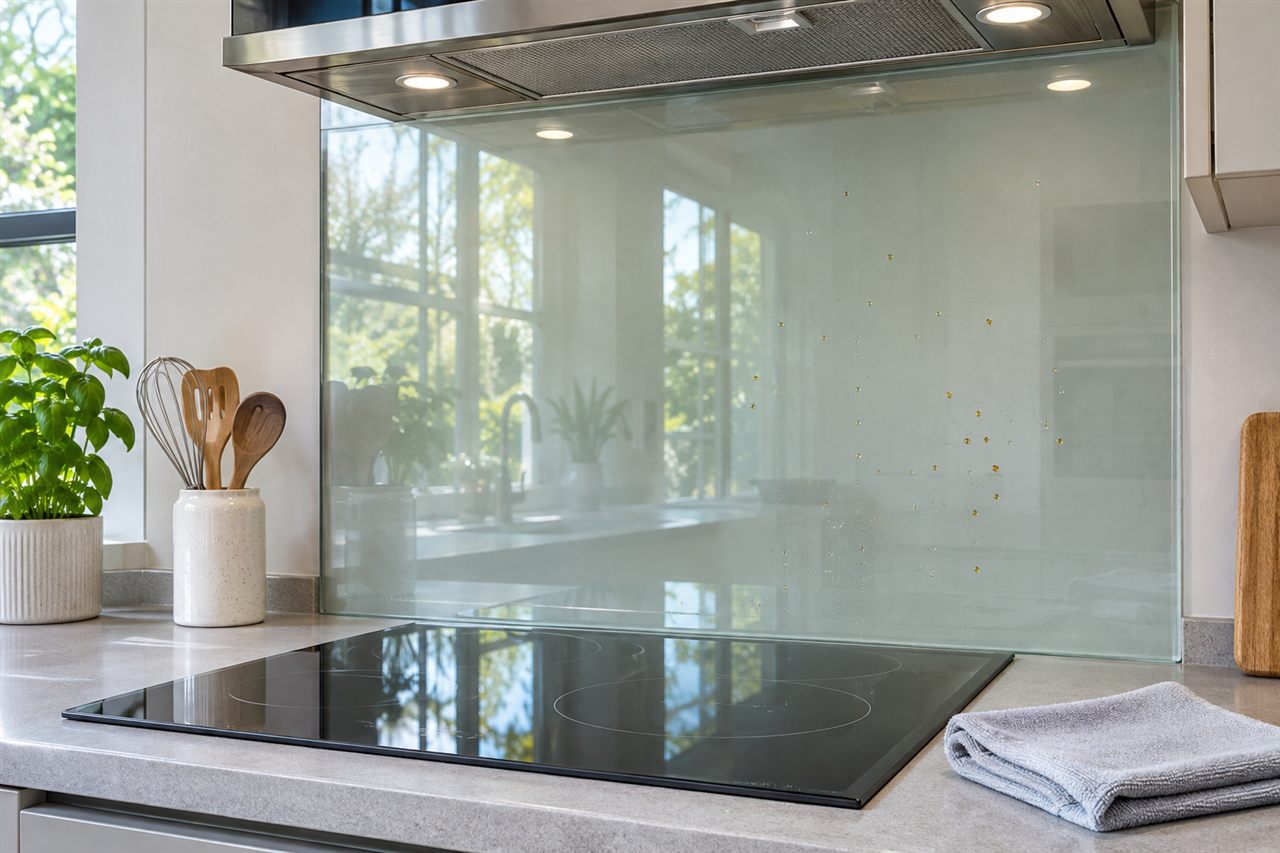
A glass splashback is close to heat, cooking grease and the worktop, so several kinds of mark can meet on one pane. The glass may also be painted, printed, filmed or coated on one face. Cleaning the visible surface should not involve scraping an unknown finish or soaking the edges. Identify the product and its care instructions before choosing more than a gentle routine.
Find out which face you can clean
Check the installer paperwork or supplier details for the glass type and coating. Some splashbacks have colour on the reverse, protected behind the glass; others have a film or treatment on the accessible face. A mirrored panel may have backing that needs particular care. Do not assume a window-cleaning demonstration applies because both surfaces are glass.
Look at the joins around the hob, worktop and sockets. A loose seal or gap is a fitting issue, not a place to push cleaner. If the panel is cracked, chipped or moving, stop and seek appropriate advice. Cleaning cannot make damaged glazing safe or restore a failed installation.
Let the cooking area cool
Turn off the hob and allow nearby surfaces to cool before wiping. A hot pan, burner or glass panel can make a product dry too quickly and may create an injury risk. Clear food and utensils from the work area. Keep cloths and bottles away from an active flame or hot element. Do not reach across the hob to finish a distant corner while it is still in use.
Move small objects from the worktop so you can reach the bottom edge comfortably. Protect a sensitive worktop from product drips, but do not tape a material to the glass unless the supplier permits it. Use a stable stance and suitable access. A high panel should not tempt you to balance on a chair.
Remove grit before grease
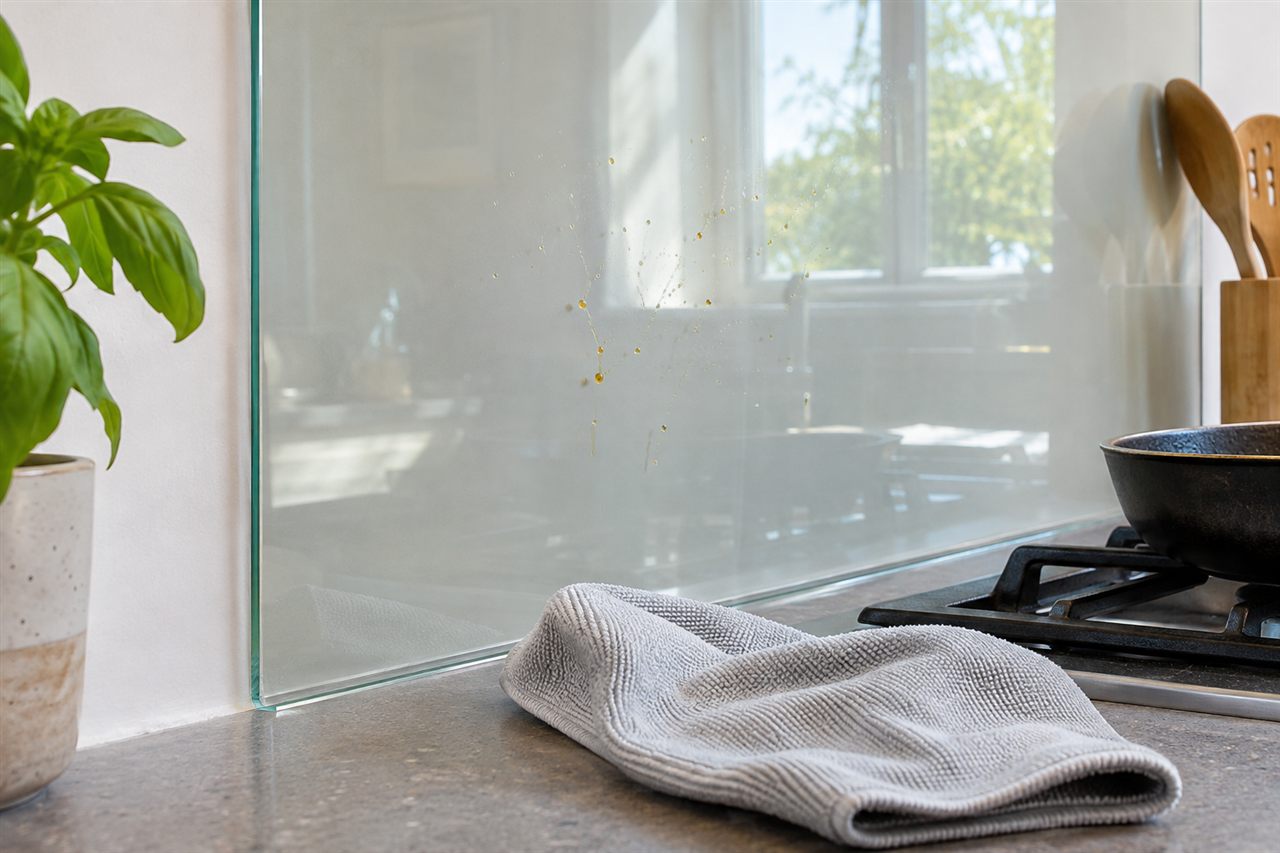
Look for crumbs, salt crystals and other loose particles. Lift them with a clean soft cloth or method approved for the glass before rubbing a greasy patch. Grit caught under a cloth can scratch an exposed coating. Change the cloth when it becomes dirty. A cloth used on a gritty worktop should not be the one you use to finish the pane.
A small care kit can help you avoid reaching for the wrong cupboard bottle. Keep a clean soft cloth for lifting dust, another for the approved glass cleaner and a dry cloth for the finish. Wash them under their own care instructions and check that no grit remains before reuse. Do not leave a used cloth pressed against the lower seal. If the supplier recommends a particular product, retain its label so the method and removal step are available to anyone who cleans the kitchen.
Pilkington’s general glass guidance recommends clean cloths and non-abrasive cleaners for ordinary glass. Its coated-glass instructions add specific caution around abrasive particles and metal tools. These examples support a gentle starting point, but the splashback supplier’s instructions decide what is safe for the installed panel.
Use a suitable cleaner in small sections
Choose a product approved for the accessible surface and follow its label. Apply it as directed, often to a cloth rather than spraying towards sockets and joins. Work on one manageable area so the product does not dry before you remove it. A larger amount may leave more residue to finish, especially over a warm kitchen surface.
Lift grease with controlled movement and a fresh cloth face. Do not add a second cleaner to a patch that still carries the first. Rinse or wipe away product under the instructions, then finish with a clean lint-free cloth if permitted. Pay attention to the lower edge without forcing liquid behind the panel or into sealant.
Leave scrapers out of an uncertain plan
A metal blade can seem effective on dried food, but it may scratch coated glass or catch a printed edge. Do not use one unless the exact maker’s guidance permits it for that surface and use. Avoid scouring pads, abrasive powders and strong chemicals. Pilkington’s coated-glass care specifically restricts metal objects and harsh cleaners on its product; a splashback could have its own limits.
If a mark resists the approved routine, note whether it is on the front face, behind the glass or within the material. Paint splashes, adhesive and burned-on deposits need separate assessment. More pressure can turn a small residue problem into permanent surface damage. Take a photograph and ask the supplier before escalating.
When a contractor leaves a mark, record when it appeared before attempting removal. A cooking splash, decorator paint and adhesive from signage are different substances. A photograph can show both the residue and its position near a socket, hob or seal. That context helps the supplier or cleaner decide whether surface cleaning is suitable. It also avoids repeated attempts by people using incompatible products on the same area.
Keep sockets, trims and sealant separate
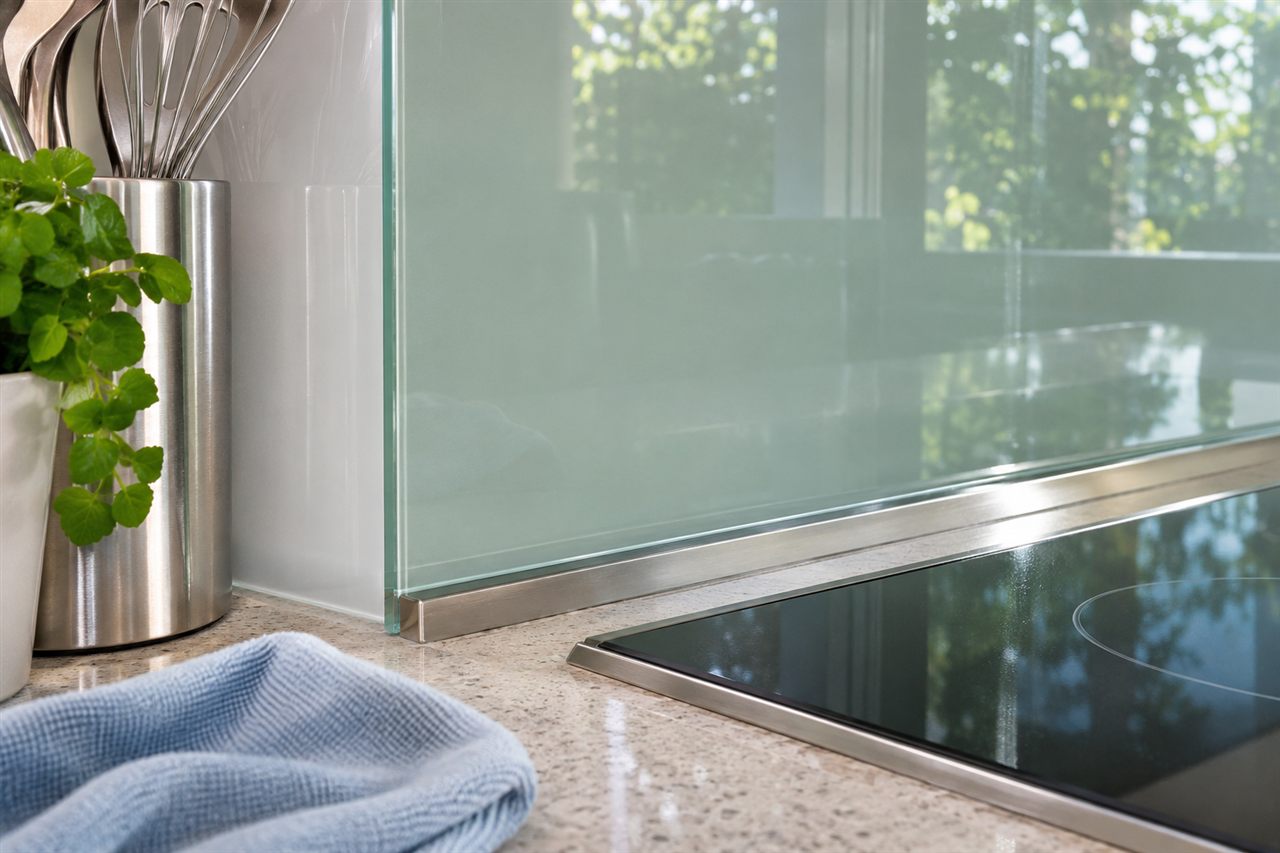
Do not spray cleaner towards electrical accessories or run a wet cloth behind a socket plate. A socket is not part of the glass-cleaning task. Wipe only accessible surrounding areas with controlled moisture and follow electrical safety guidance. If the fitting is loose or damaged, stop and seek an appropriate professional.
Metal trims, painted walls and worktops beside the pane need their own compatible methods. A glass cleaner may mark natural stone or timber. Use separate cloths and keep the product on the intended surface. If the bottom sealant is discoloured, distinguish ordinary surface dirt from a loose or failing joint. Cleaning will not reattach it.
Check the result after drying
View the glass from a normal position once it is dry. A streak may follow a dirty cloth or product left at the lower edge; correct that cause before repeating the whole wash. A cloudy area behind the glass, a scratch or a coating defect will not move with another wipe. Do not chase a perfect reflection by layering more product.
Keep the care sheet with the kitchen records. If a particular product caused smears, record it so the next person does not repeat the attempt. A short routine after cooking, once the area is cool, is easier than a delayed effort to remove several weeks of grease.
Plan wider kitchen cleaning
When arranging domestic cleaning in Guildford, identify any exposed coating, coloured backing or restricted cleaner. If the kitchen needs a more detailed visit, discuss the splashback separately under deep cleaning. Share photographs of unusual residue and state what products have already been used. Do not assume a general glass task includes repairs to sealant or glazing.
A sound splashback can be maintained with a method suited to its actual construction. Start with loose grit, protect nearby materials and use the gentlest approved cleaner. If the mark behaves like damage rather than dirt, stop and ask for material-specific advice. Preserving the finish matters more than forcing one stubborn patch to disappear.