
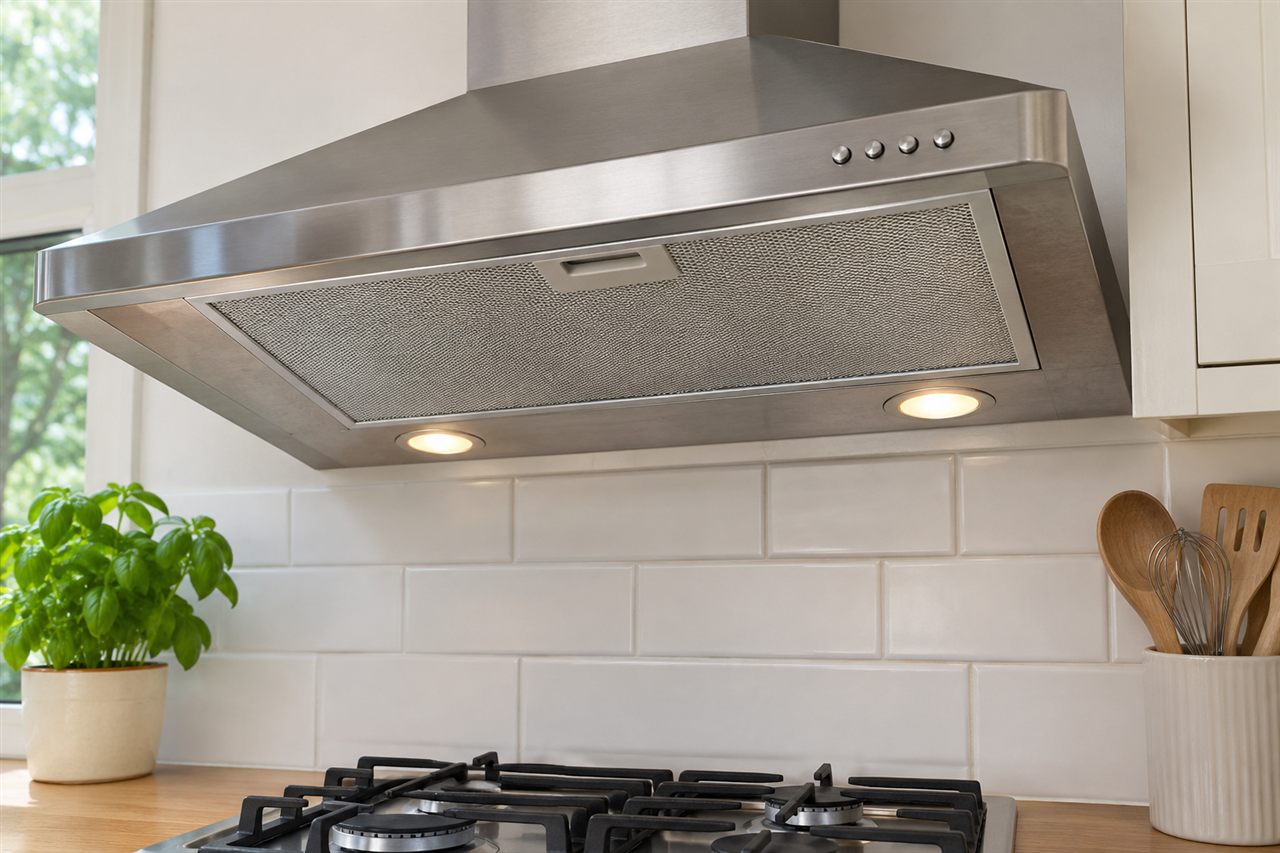
An extractor hood can hold more than one kind of filter. The metal panel you can see may collect grease, while a recirculating hood may also have an odour filter behind it. Treating both as washable can ruin a part or leave the hood assembled incorrectly. Before tackling the kitchen grease, find the model number and its maintenance instructions. This guide focuses on accessible filters and surrounding surfaces; a faulty fan or electrical problem needs separate attention.
Find the model and filter arrangement
Look for the hood’s model label, paperwork or maker’s support page. Check whether air is ducted outside or recirculated into the room. The filter arrangement may be different even when two hoods look alike. A metal mesh panel, paper grease filter and carbon odour cartridge should not be treated as interchangeable parts. Note the part numbers before ordering a replacement.
Bosch’s hood guidance distinguishes washable metal grease filters from recirculating filters that are replaced on its described models. Other manufacturers may have different serviceable parts, so use the manual for the appliance in front of you. If the filter type remains uncertain, leave it in place until you can identify it. An experimental soak is not a safe way to find out.
Make the appliance safe to approach
Switch off the hood and follow the manual’s instructions for disconnecting it before cleaning. Allow hot surfaces from cooking to cool. Clear pans, food and loose items from the hob below, then protect the worktop as appropriate. Good lighting helps you see the catch and support the filter with both hands. Do not stand on a chair to reach a high canopy.
Keep liquid away from switches, lights, sockets and motor openings. A greasy exterior can tempt you to spray cleaner directly upwards, where it may run into parts you cannot see. Apply an approved product as the maker directs, often to a cloth rather than an electrical area. If the hood is unstable, damaged or difficult to access, stop and arrange suitable help.
Remove the filter without bending it
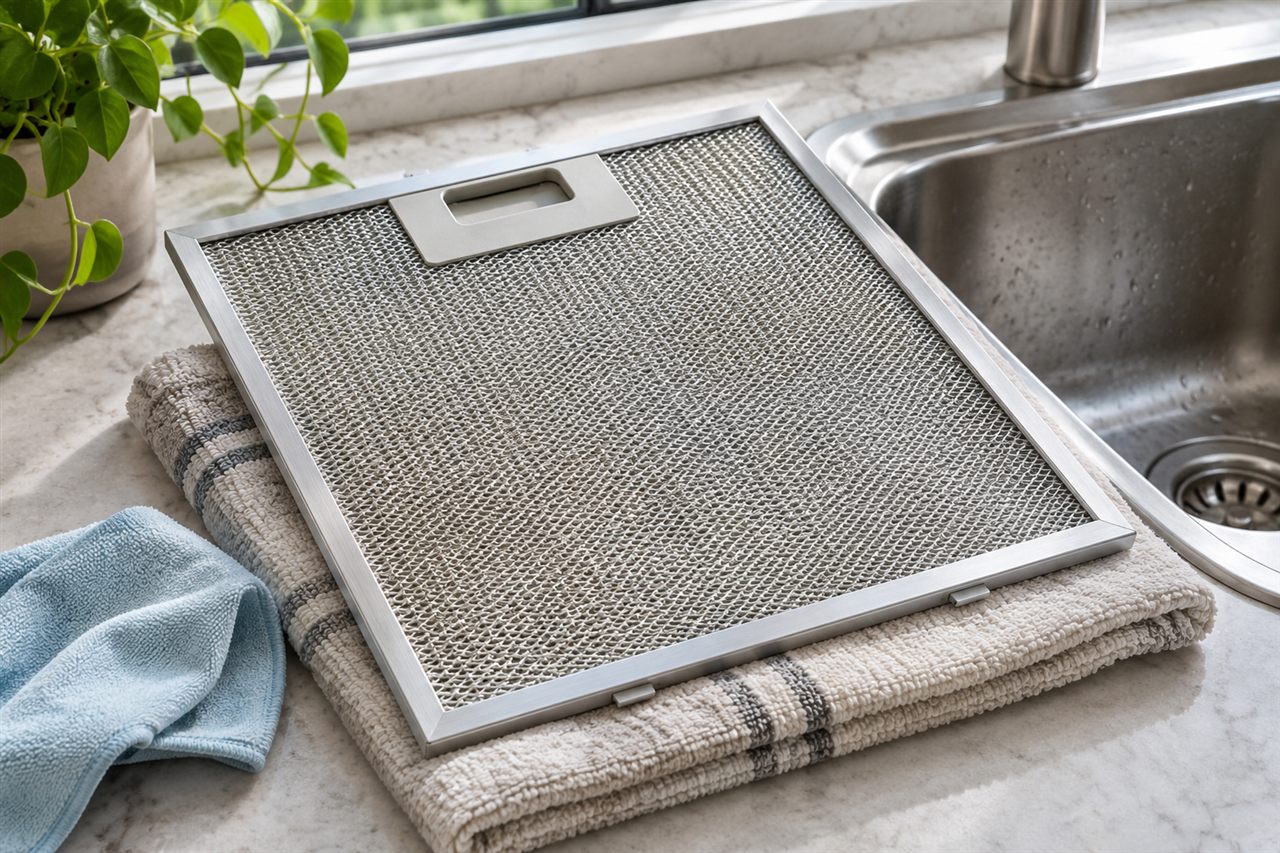
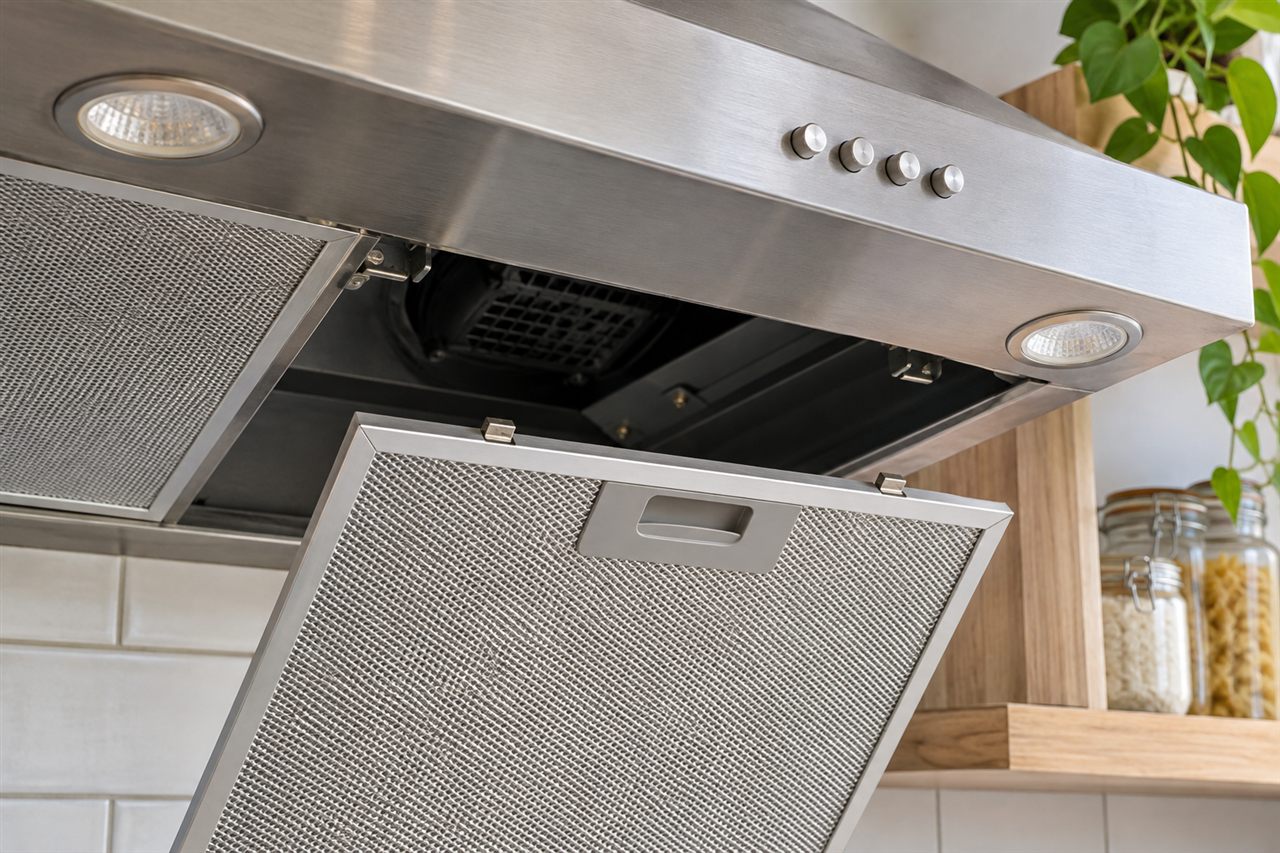
Read the release sequence before pressing a tab. Some filters drop from one edge and need support underneath; others slide from a channel. Take a photograph of the installed position if the orientation is not obvious. Avoid pulling on the mesh itself, which can deform. Put the removed part on a towel where grease will not mark the surrounding surface.
Inspect the frame and latch. A broken catch will not be repaired by cleaning the panel. Do not dismantle the fan housing or pull out fixed wiring to reach a hidden filter. If a replaceable cartridge is behind the grease panel, follow the manual for removing and refitting it, and keep its part number with your maintenance notes.
Wash only a permitted metal grease filter
If the manual identifies a washable metal filter, use its specified product, temperature and method. Bosch describes hand washing suitable filters with warm water and detergent, and notes that some can go in a dishwasher only when the model guidance permits it. Do not assume every metal filter is dishwasher safe. A finish may change, and a bent mesh panel may no longer fit properly.
For hand washing, use a soft brush or sponge if allowed, working gently across the mesh rather than crushing it. Give a permitted cleaner the labelled working time. Rinse it as instructed to remove product and loose grease. Avoid mixing degreasers, extending contact time or using a sharp tool to clear a stubborn corner. A damaged or heavily clogged filter may need replacement advice.
Keep replaceable filters dry
Many carbon or charcoal odour filters are not designed to be washed. Bosch’s guidance for its recirculating filters says to replace them rather than clean them. Check the exact type and replacement schedule for your hood. A filter that looks dark may be behaving as designed; appearance alone does not tell you how to maintain it.
Do not put a disposable paper or carbon filter into a sink because it sits near a washable metal one. Keep new filters in their packaging until you are ready to fit them. Confirm the model compatibility and orientation. If a replacement does not seat correctly, do not force it or run the hood with a loose panel.
Clean the accessible hood surfaces
Check the care instructions for stainless steel, glass, painted panels and control markings. Use a compatible product and soft cloth, keeping moisture controlled. Grease on an outer edge may soften under an approved method; do not scrape a coated surface or let cleaner pool around buttons. Wipe away product residue as directed, then dry the finish where required.
Look at the area around the hood, but keep cupboard fronts and splashbacks on their own material care plans. A product approved for metal mesh may be unsuitable for timber or stone beside it. Note any loose trim, cracked glass or damaged light cover before continuing. Cleaning should not conceal a defect that needs a repairer.
Dry and refit before use
Let a washed filter dry completely under the manufacturer’s guidance. Bosch advises against using direct heat to speed this stage. Refitting a damp panel can put moisture where it does not belong. Match the original position, engage the catch as instructed and check that it holds without wobbling. Do not operate the hood with a filter partly attached.
Restore power according to the manual and check normal operation from a safe position. If extraction remains poor, the cause may be ducting, installation or a fan issue rather than surface grease. Record the symptom and seek appropriate appliance advice. Repeated cleaning is not a substitute for diagnosing an electrical or ventilation fault.
Plan the next maintenance task
Keep the model number, filter type and the date of cleaning or replacement together. The maker’s schedule is more useful than a generic interval, especially if cooking habits change. A brief check after frequent frying may reveal build-up earlier, but do not dismantle the hood each time you wipe the hob. Maintain the accessible exterior under its own instructions.
If more than one person cleans the kitchen, make the filter rule clear. A note in the appliance manual can say which panel is washable and which is replaceable. Keep the maker link or part number, not a spare in a drawer. That saves the next person from guessing after the packaging has gone. It also helps a cleaner understand whether the requested work is surface cleaning, filter washing or a purchase and fitting task.
For a wider kitchen job, ask about appliance cleaning in Guildford and identify the hood model and filter parts. If grease has built up across cupboards and reachable surfaces, discuss a separate deep cleaning visit. Neither service name guarantees electrical servicing or filter replacement; agree those details explicitly. A clean, correctly fitted filter is useful only when the method suits that particular hood.