

Rain can reveal a gutter problem more clearly than a dry day, but it does not tell you exactly what caused it. Water may spill over a blocked section, escape through a joint or follow a route that is hard to see from the ground. A short observation after rain gives a gutter cleaner useful information without requiring you to climb. Keep the inspection at ground level and away from falling water, unstable surfaces and electrical fittings.
Choose a safe viewing point
Wait until conditions allow you to walk around the property safely. Do not go out during lightning, strong wind or slippery conditions merely to watch a gutter. View the roofline from a normal path or another stable place where you do not need to lean, climb or stand beneath a loose fitting. Take photographs only when you can do so without stepping into traffic or a hazardous area.
The Health and Safety Executive describes ground level methods for assessing and cleaning some gutters, and advises avoiding work at height where possible. That does not make a ground inspection a substitute for a trained assessment, but it is a sensible way for a householder to gather information. Leave ladders, roofs and high access to a properly planned job.
Follow the water, not just the leaves
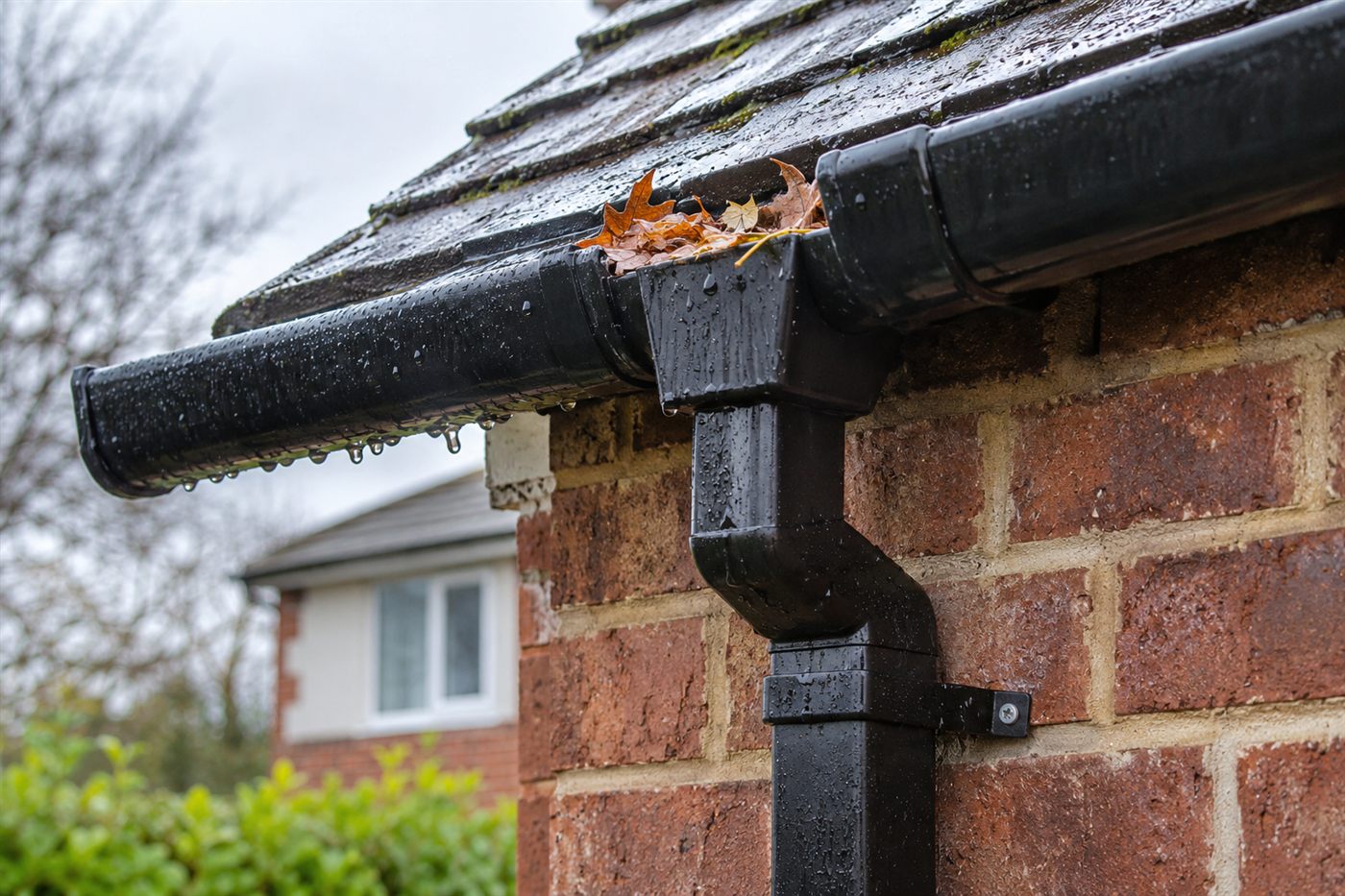
Note where water runs normally into a downpipe and where it spills over an edge. Record whether the overflow appears at one point, along a length or near an outlet. A visible pile of leaves may be relevant, but it is not proof that the whole problem lies there. A gutter can also be misaligned, damaged or obstructed out of sight.
Use a wider photograph showing the wall and roofline, then a closer view if you can obtain one safely. Include a landmark such as a window or corner so the area can be identified later. A close photograph of water alone rarely shows which gutter run needs attention. Note the time and whether the rain was light or heavy, without making a diagnosis from one event.
Notice whether the section overflows only after a downpour or whenever rain begins. That pattern is useful to report, although it cannot identify the cause on its own. Ask neighbours only about shared drainage if their property is affected; do not enter another garden without permission. If the overflow reaches a doorway, electrical equipment or a route people must use, keep clear and seek prompt help. Your notes should say what you observed, not certify that the gutter is sound or that the building is dry.
Look for signs at the wall and ground
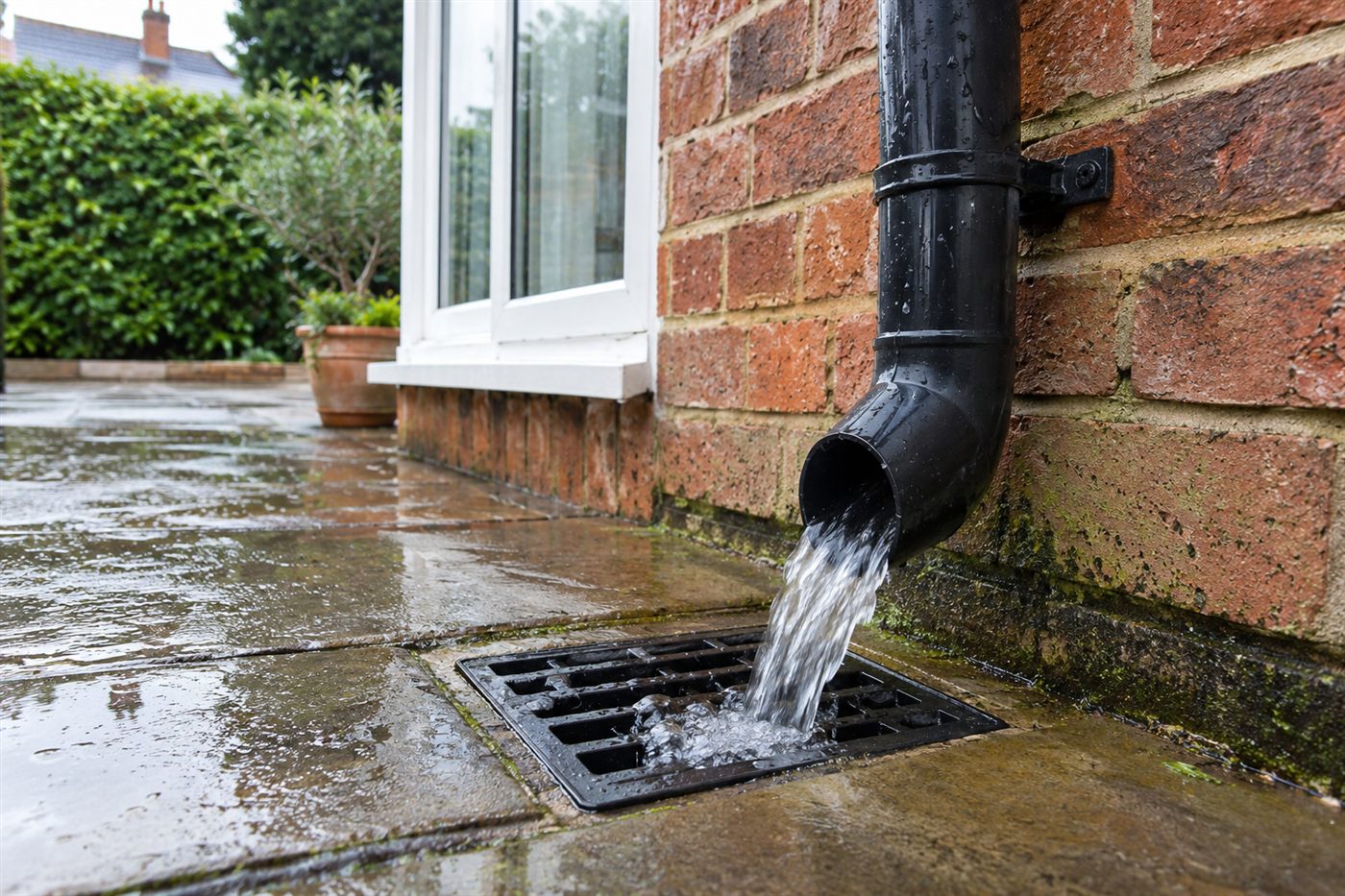
From a safe position, check for wet patches beneath a gutter, splashing onto paving or water collecting near the building. NHBC guidance notes that wet patches below may indicate a blocked gutter or downpipe. They may also require a broader property investigation. Do not assume a visible damp mark will disappear simply because a gutter is cleared.
Watch where the downpipe discharges. If water appears to back up at ground level, the issue may be beyond the gutter itself. Do not lift drain covers or put tools into an unknown outlet to test it. Record what you can see and mention it when asking for advice. A photograph of the whole route is more useful than a guess about a buried connection.
Separate debris from damage
Leaves and moss visible in an accessible channel may point to a clearance job. A sagging run, loose bracket, open joint or broken section is different. Cleaning can remove suitable debris, but it cannot restore a damaged fitting by itself. Mark the location and describe what seems to move or leak, without touching it from below.
A stain on the wall can persist after water flow is corrected. Treat the wall’s condition as a separate question, especially if plaster, timber or electrics may be affected. Do not spray cleaner at height to make the stain look better. The first task is to establish where water is going and whether repair or drainage work is needed.
Do not improvise with height
It is tempting to put a ladder against the gutter for a quick look. The HSE warns that a ladder needs suitable ground, condition, positioning and a secure resting point; plastic gutters are not a strong support. This guide does not provide a ladder procedure for householders. If the area cannot be assessed from the ground, describe the access and ask an appropriate provider to plan it.
Keep people away from a loose or overflowing section if falling debris or water makes the path unsafe. Do not pull down ivy, branches or a hanging fitting. Those may be attached more firmly than they appear, or conceal damage. A camera zoom can sometimes provide enough detail for an initial enquiry without bringing anyone closer.
Record observations for follow-up
Describe the property type, approximate storeys and which elevation is affected: front, rear or side. Mention a conservatory, extension, narrow passage, steep ground or shared access that may affect the working method. Say whether the concern is routine debris, a persistent overflow or visible damage. Include photographs from the safe positions already available.
When asking about gutter cleaning in Guildford, identify the gutter runs and any outlet or downpipe concern. Ask what is included and how inaccessible sections will be handled. Do not assume a quote for clearing debris also includes repairs, drain work or cleaning a stained wall. A clear scope protects both the property and the visit time.
Check the result without climbing
After suitable work, keep the description of what was found and any areas that could not be reached. During a later rainfall, observe from the same safe points if conditions allow. Compare where water now flows rather than expecting the wall beneath to dry immediately. If overflow returns, report the location, rainfall and work already completed.
Do not stage a heavy water test from an upstairs window or hose a roofline to force a demonstration. That can create runoff in places where it does not normally occur. Normal rainfall and the contractor’s chosen checking method are better grounds for a follow-up conversation. A downpipe issue or failing joint may need a different trade from routine gutter clearance.
Keep related jobs separate
If a conservatory roof or frame also needs attention, describe it under conservatory cleaning; do not treat its panels as another gutter. Exterior glazing has its own access and material questions under window cleaning. Persistent internal damp deserves appropriate building investigation, while mould removal addresses suitable affected surfaces rather than the source of water.
Keep a brief record of the date, visible flow, photographs and any advice received. Check again after leaves accumulate or weather exposes a new concern, always from a safe location. The goal is a useful description and a properly scoped next step, not a household diagnosis made from the pavement.