

A natural stone worktop needs an everyday routine that respects both the stone and whatever treatment protects it. Marble, granite, quartzite and limestone do not respond identically to the same kitchen product. A polished surface can also look clean while a sealer, joint or edge needs attention. This guide helps you organise routine care between deeper cleans, distinguish a mark from damage and keep questions for the installer when the material is uncertain.
Find the stone and its care record
Ask the supplier or installer for the stone name, finish and care instructions. Keep notes of any protective treatment and when it was applied. A pale worktop is not necessarily marble, and a dark one is not necessarily granite. Even within one stone family, the finish and sealer can change the approved cleaner. Do not choose a bottle solely because its label says it works on stone.
The Natural Stone Institute explains that some stones benefit from an impregnating treatment, but this makes a surface more resistant to staining rather than stain proof. It also advises consulting the supplier about the particular stone and product. Cosentino’s Sensa range has its own factory treatment and maintenance guidance. Do not assume either approach describes an unidentified worktop in your kitchen.
Build a small daily routine
Clear crumbs and loose grit before wiping so they are not dragged across a polished surface. Use a soft clean cloth and the routine cleaner approved for your stone and finish. Follow its dilution and removal instructions, then dry the area if directed. Pay attention to the space beside the sink and around food preparation, where splashes can sit unnoticed beneath a board or container.
Cosentino recommends neutral soap and a damp microfibre cloth for its Sensa surfaces, followed by removal of soap residue and drying. That is a product example, not a universal stone recipe. Keep the exact care sheet accessible so everyone in the household uses a consistent method. A quick suitable wipe after cooking is easier than repeatedly treating dried residue with stronger products.
If a visitor or household member helps in the kitchen, tell them which cleaner belongs on the worktop. A bottle left beside the sink can look suitable for every surface when it is meant only for stainless steel or ceramic. A label on the storage shelf and the product instructions can prevent that mistake. Keep cleaners in their containers and do not combine them. When an unfamiliar product has already been applied, record its name and stop before adding another, especially on a polished or treated stone.
Respond promptly to spills
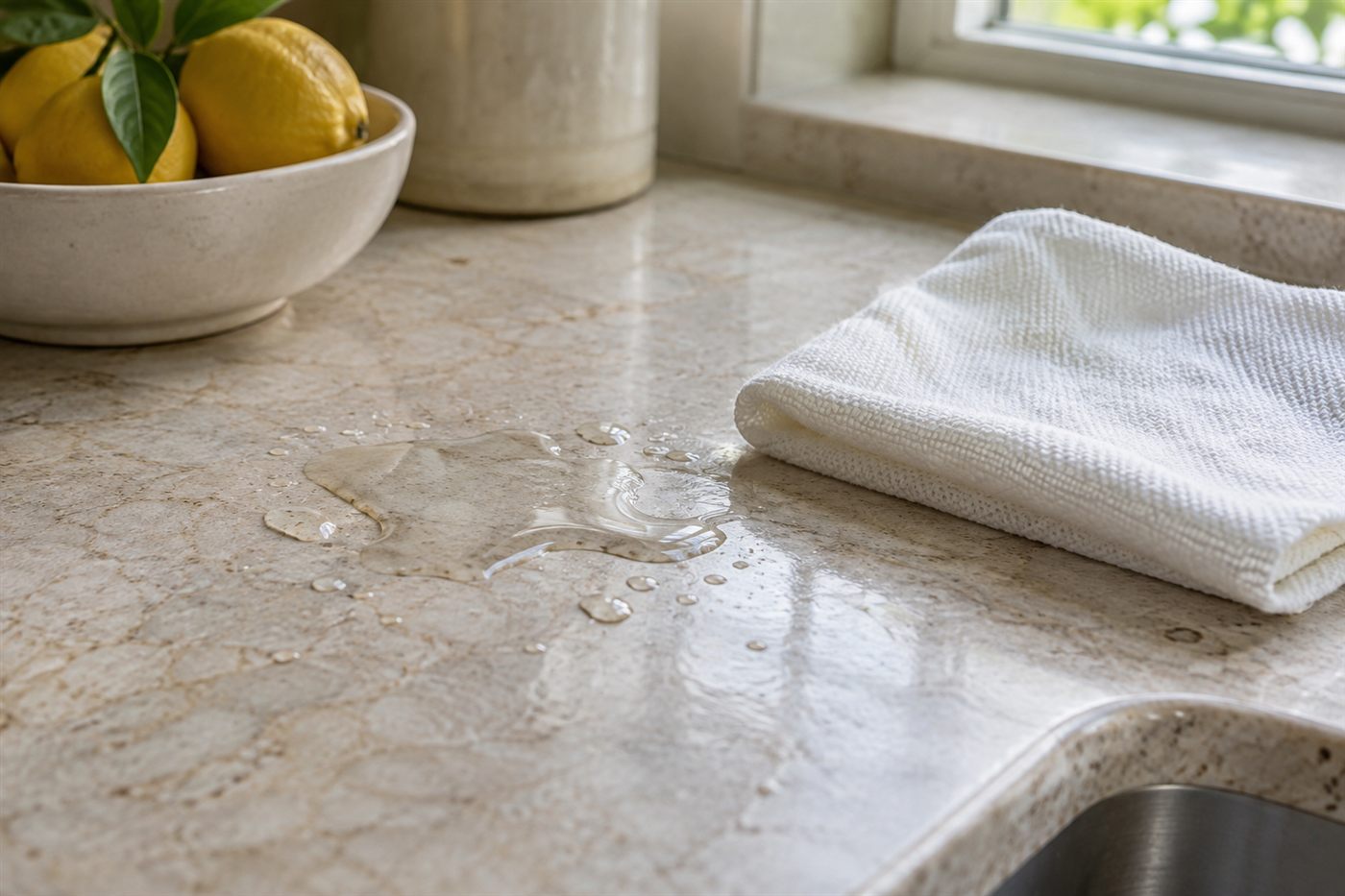
Lift loose solids without scraping and blot liquid before it spreads. Check the underside of a jar or chopping board if it has been standing in the spill. Do not leave fruit juice, wine, oil or cleaner pooled at an edge while deciding how to treat a mark. Follow the maker’s guidance for the substance and finish; avoid adding a second product to an unknown residue.
The Natural Stone Institute cautions that acidic substances and cleaners can dull or etch some calcareous stones. Etching may look like a cloudy water mark but is a change to the surface, not grime waiting to be wiped away. A protective treatment does not guarantee immunity. If a dull patch remains after approved routine care, stop and seek material-specific assessment.
Keep heat and abrasion under control
Use trivets for hot pans and chopping boards for cutting, following the worktop maker’s advice. Do not rely on the stone feeling hard enough to resist every knife, pan base or gritty bag. Cosentino recommends a trivet for its Sensa worktops. Sand or crumbs caught beneath an object can also mark a finish as it moves across the surface.
Avoid scouring pads, powdered abrasives and metal scrapers unless the exact manufacturer guidance permits a specific use. A scratch can resemble a stubborn line of residue at first glance. Inspect it from another angle and stop before applying pressure. Cleaning cannot restore missing polish or repair a chipped edge by itself.
Understand the sealer question
Do not assume that every stone needs a fresh coat on a fixed calendar. The correct treatment depends on the stone, existing protection and maker’s instructions. A generic online water drop test may not establish the condition of a proprietary treatment. Ask the supplier what was applied and how it should be assessed. Record the answer with the installation paperwork.
Applying an incompatible product can change the appearance or leave residue. If a sealer is proposed for a food preparation area, check that it is suitable for that use and follow the product instructions. Leave stripping, repair and reapplication to an appropriate specialist when the finish is uncertain. Routine wiping should not become an improvised restoration project.
Watch joins, edges and fittings
Keep water from standing around a sink, tap or joint. Report a loose seal, movement or a chipped edge rather than rubbing it harder. A stain near a joint may involve liquid beneath the surface or another installation concern. Photograph the whole area and a closer view, then tell the installer what happened and which products were used.
Metal taps, glass splashbacks and timber cabinets beside the stone have their own care rules. Do not carry a stone cleaner over them automatically. Apply product in a controlled way rather than spraying the whole corner. Use a clean cloth for each material where needed, particularly when one surface has an acidic or specialist treatment.
Separate soil, stain and etching
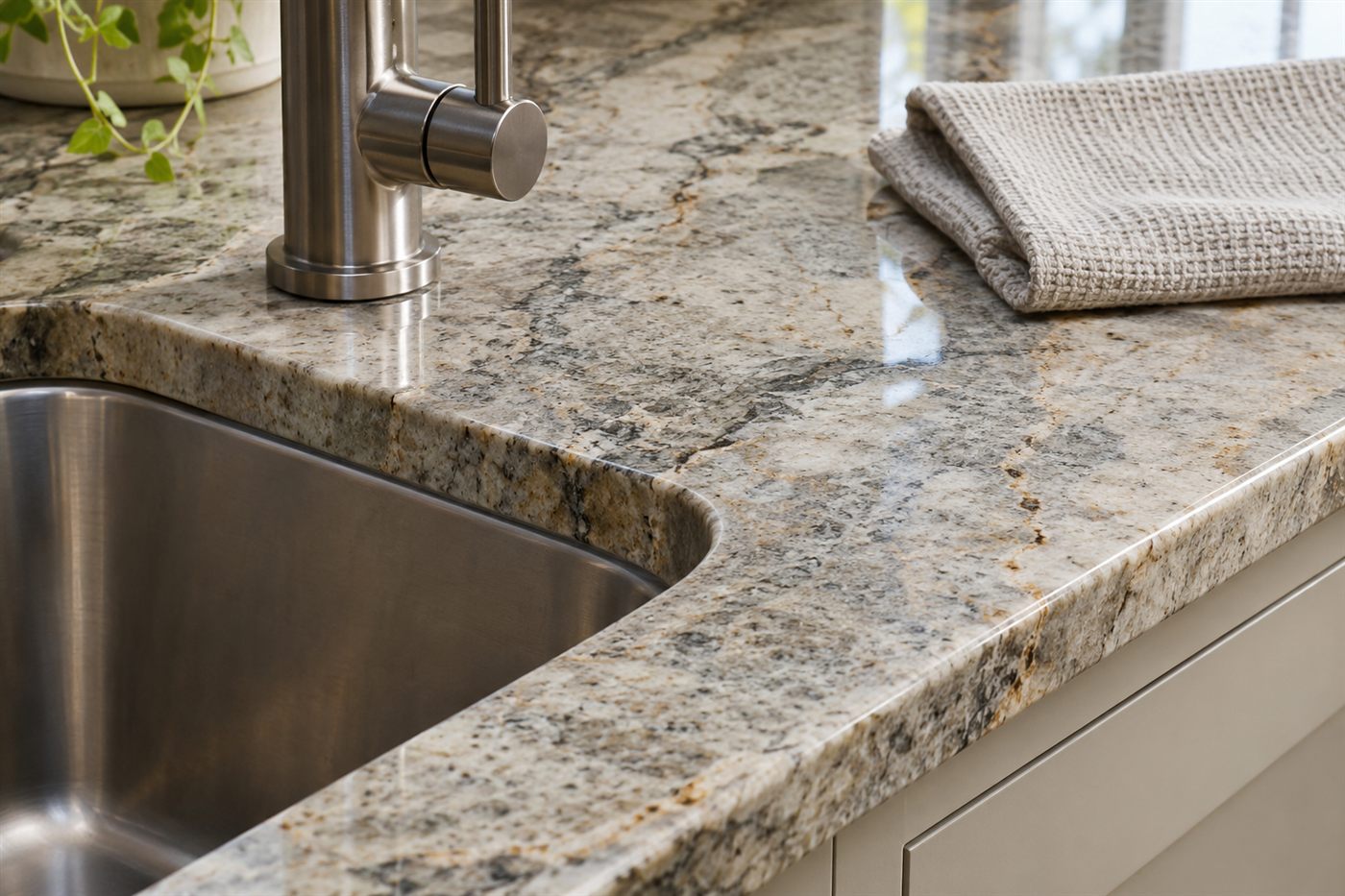
Ordinary soil may transfer to a cloth with the permitted cleaner. A stain can remain within the material after the surface is clean. Etching can leave a dull or altered texture. These are different questions, and repeated washing may not answer the last two. Note when the mark appeared, what touched it and whether it changes as the worktop dries.
Do not attempt an aggressive poultice, solvent or polishing process from a generic recipe. The Natural Stone Institute provides stain guidance, but it also makes clear that stone and stain type matter. A supplier or stone specialist can assess the actual surface. An honest description is more useful than claiming a particular cleaner will return it to a new appearance.
Plan broader kitchen care
For ordinary household upkeep, agree stone restrictions when discussing domestic cleaning in Guildford. If cupboards, fittings and other surfaces need a longer visit, describe the worktop separately under deep cleaning. Provide the installer guidance and identify any marks that need assessment rather than routine wiping. A service name does not replace material-specific instructions.
Keep the right cloth and approved product to hand, wipe spills promptly and move hot or abrasive objects with care. Review the surface occasionally in normal light, noting a change in sheen or an edge that needs repair. A natural stone worktop stays easier to maintain when everyday cleaning, protective treatment and restoration remain distinct decisions.